How to Block Effectively in Girls Lacrosse Defense
Blocking is more than just putting your stick up. Improve your defense by mastering body stance, stick control, and anticipating passes.
Library section
Women's defensive systems, pressure, help rules, and transition coverage.
Blocking is more than just putting your stick up. Improve your defense by mastering body stance, stick control, and anticipating passes.
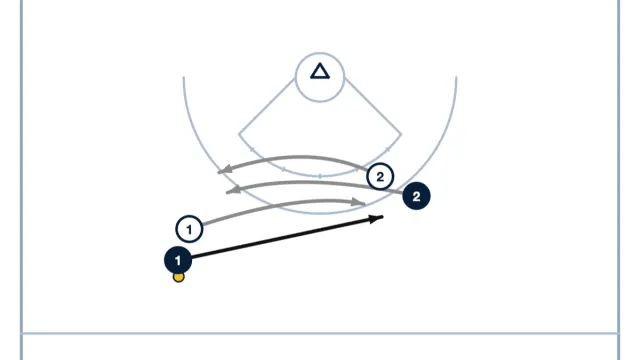
Defensive success in girls’ lacrosse starts with fundamentals. Master transition defense with this breakdown on how to communicate, slide, and regain balance after a breakdown.
Learn how to check safely and effectively in girls’ lacrosse with this step-by-step guide by Coach Alex Fennell from Wagner. Focus on body position, timing, and stick angle.
Defending behind the goal in women's lacrosse requires maintaining inside positioning, staying above the goal line extended, and shadowing the attacker until she commits to a side. By beating the attacker to where the crease meets the goal line extended and keeping her outside the eight-meter arc, the defender limits high-percentage scoring opportunities and effectively controls the play.
communication, and awareness to dictate the attacker's movement and provide support. By maintaining proper positioning, staying balanced, and directing an attacker's movement, defenders can control the game rather than simply reacting, ultimately shutting down even the most aggressive offenses.
A crease defender in women’s lacrosse is a defensive player responsible for protecting the area around the goal, particularly against attackers who operate behind or near the goal line extended (GLE). The primary objective of the crease defender is to prevent the attacker from getting into the middle of the field, close to the goal, and to force them wide or away from dangerous scoring areas.
the ABCDs of effective 1-on-1 defense in women’s lacrosse: Approach, Break down, Contact, and Drive. By mastering these fundamentals, players can improve their defensive positioning, disrupt offensive attacks, and prevent fouls.
Double-teaming in women’s lacrosse is a defensive strategy used to trap an attacker, apply pressure, and create turnovers, especially in critical game moments. To avoid penalties like shooting space violations and the three-second rule, defenders must communicate effectively and execute the double team with proper timing and positioning.
Zone defense in women’s lacrosse is a strategy where defenders cover specific areas of the field, focusing on clogging high-risk scoring zones, such as the 8-meter arc, while following key rules like avoiding shooting space violations and the three-second rule. This approach is effective against strong offensive players but requires strong communication and quick rotation to prevent gaps and potential scoring opportunities.
Shooting space in women’s lacrosse is a safety rule that prevents defenders from stepping into the path between an attacker and the goal, unless they are within a stick’s length of the attacker. Violating this rule results in a penalty, awarding the attacker an 8-meter free shot while ensuring safe play on the field.