How to Run Man-Up Offense with Cut Throughs and Flash Cuts
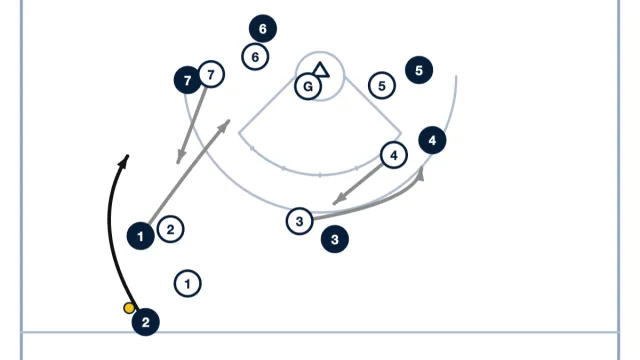
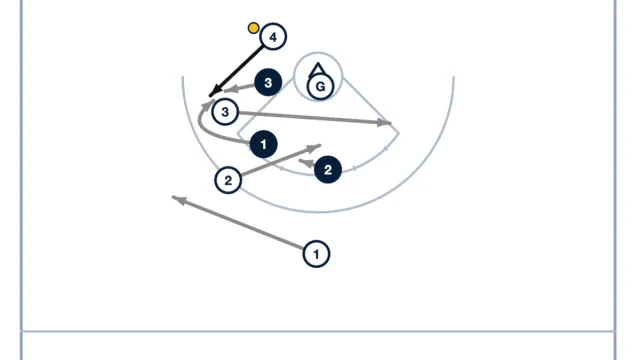
This drill teaches how to use dodge, cut-through, flash cut, and outlets to attack from the front side and find open players.
Library section
Women's offensive actions, spacing concepts, shooting reads, and set plays.
This drill teaches how to use dodge, cut-through, flash cut, and outlets to attack from the front side and find open players.

These cutting tips can make any player a better teammate and a smarter finisher in lacrosse.
Today, I sit down with Coach Gary Pottebaum. With years of experience shaping both boys’ and girls’ lacrosse programs, Coach P has become a driving force in youth sports, building not just teams but a true lacrosse culture. Our conversation dives deep into his strategic approach, the art of player development, and his philosophy on leadership. Tune in for insights that every aspiring coach, player, or lacrosse fan won’t want to miss. Key takeaways include:
Nations in women’s lacrosse involves three players—Dodger, Picker, and Feeder—coordinating to create scoring opportunities through dynamic roles and focused ball movement. It emphasizes using picks and precise passing to exploit defensive weaknesses and generate mismatches, requiring players to adapt roles fluidly and react to the defense's movement.
The principles-based offense in women's lacrosse focuses on fundamental strategies such as possession, passing, and coordinated movements (like picking and spacing) to create scoring opportunities and maintain control of the game. It emphasizes teamwork and adaptability, using structured plays that exploit defensive weaknesses through calculated, continuous ball movement and player positioning.
The 43 Weave Motion offense is a dynamic lacrosse strategy that emphasizes continuous player movement and strategic positioning with a three-out top and four players down low. It utilizes passes, picks, weaves, and flips to disorient the defense, ensuring players are always cycling and creating new scoring opportunities.
Effective offensive spacing in girls' lacrosse stretches the defense, opens dodging lanes, and maximizes scoring opportunities by maintaining movement, clearing space, and strategically positioning players. Utilizing high positioning, the X behind the net, and continuous cycling forces defenders to cover more ground, making it harder for them to collapse and recover.
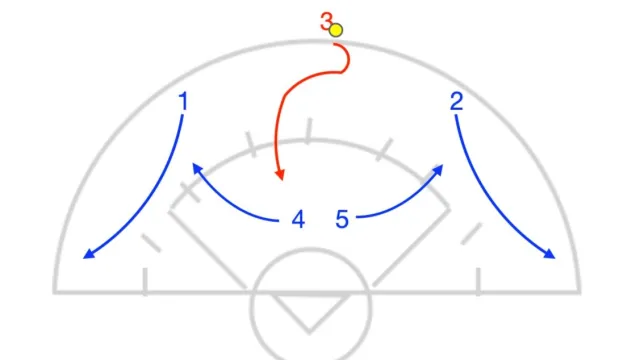
In this women's lacrosse ISO play, the center midfielder attacks the goal while the two adjacent midfielders clear space by dropping down and out, and the two attackers in front of the goal pop outward as passing options. To maintain possession and defensive readiness, a player must be positioned behind the goal to back up missed shots, while midfielders remain aware of transition responsibilities to prevent a fast break.
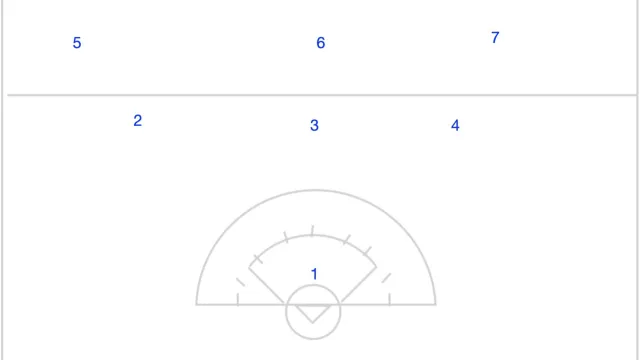
The 3-3 Zone Ride is a defensive lacrosse strategy designed to slow down the opponent's transition by forcing the ball to one side of the field and using the sideline as an additional defender, giving your team time to settle into defensive positions. It relies on disciplined rotations, tight marking, and constant communication to limit fast breaks and create challenging passing options for the opponent.
This is a great way to take advantage of an over aggressive defense.
A principles-based offense in women’s lacrosse emphasizes flexibility, spacing, and player-driven decision-making, allowing teams to adapt dynamically to various defensive tactics. This approach encourages players to use their lacrosse IQ and creativity, fostering a cohesive, unpredictable offense that can respond effectively in real time.
The pairs offense in girls’ lacrosse uses three sets of two players above the goal to create scoring opportunities through coordinated on-ball and off-ball picks, while a player behind the goal serves as a versatile outlet, feeder, and dodger. This setup emphasizes teamwork, movement, and strategic positioning to keep defenses off balance and open up shooting lanes.