
In Men's Lacrosse, Defense Is Key
In men’s lacrosse, defense is the key to shutting down the opposing team’s ability to score. A central tactic to achieving this is the adjacent slide, a strategic move that involves immediate help when a defender is about to be beaten by an opponent. We’ll start with a basic breakdown for newcomers and gradually dig deeper into its more complex execution.
What Is the Adjacent Slide?
Simple Breakdown for Beginners
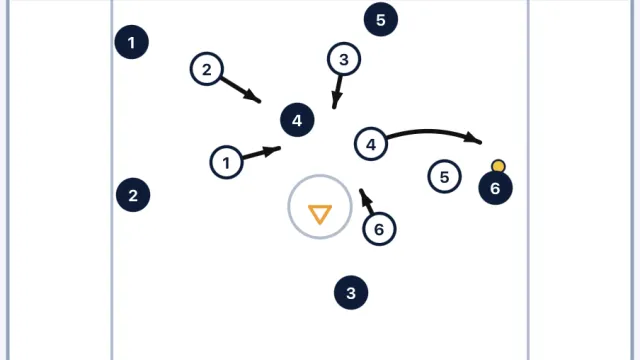
Definition: The adjacent slide is a defensive maneuver where a nearby defender (positioned next to a teammate under pressure) provides immediate support, instead of help coming from the crease.
Purpose: Its aim is to prevent an attacker from having a clear path to the goal, effectively doubling up on the opponent and shutting down a scoring chance.
How It Works
Recognition: The adjacent defender spots their teammate being beaten and identifies the need to provide help.
Sliding Over: The adjacent defender temporarily abandons their assigned attacker and slides over to assist.
Recovery: Other defenders adjust their positions, filling in gaps and ensuring no attacker remains uncovered.
When Is the Adjacent Slide Effective?
Against Strong 1v1 Attackers
In Man-to-Man Defense
Fast, Urgent Scenarios
Examples
Dodging Situations: If an offensive player dodges past a defender, the adjacent defender slides to cut off the driving lane.
Isolation Plays: When the offense isolates their best attacker, adjacent slides prevent straight-line runs at the goal.
When Is It Not Effective?
Against Well-Spaced Offenses
Communication Failures
Against Picks and Screens
Examples
Overcommitting: Sliding too early or aggressively can leave attackers open.
Hesitation: A delayed slide allows the attacker time to make a play.
How to Execute the Adjacent Slide
Step-by-Step Execution
Communication
Verbal Cues: Use "I’m hot" or "Slide!"
Continuous Talk: Communicate as the ball moves or during a dodge
Anticipation
Reading the Play: Awareness of ball and attacker
Positioning: Stay close but ready
Sliding
Proper Angle: Block attacker’s direct path
Body Positioning: Balanced stance with stick leading
Recovery
Fill the Gap: Rotate quickly to cover
Reassign Markings: Communicate new matchups
Maintaining Communication
Constant Updates: Use calls like "Switch" or "Stay"
Advanced Tips
Footwork: Practice for speed and control
Stick Work: Keep stick in passing lanes
Field Awareness: Know ball and attacker locations
Pros and Cons of the Adjacent Slide
Pros
Quick Help
Dynamic Adjustments
Disrupts Offensive Flow
Cons
Risk of Leaving Attackers Open
High Communication Demand
Potential to Be Exploited
How to Teach the Adjacent Slide
For Beginners
Explain the Concept
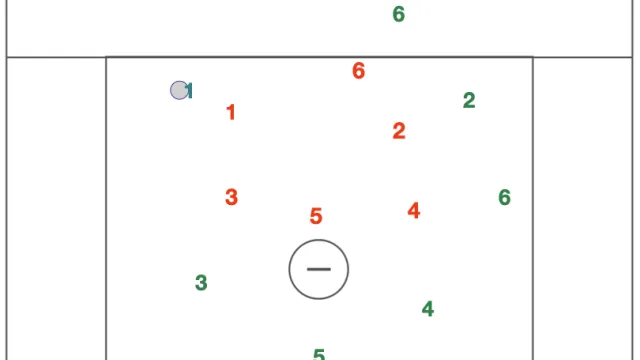
Use diagrams or on-field examples
Emphasize teamwork and awareness
Basic Drills
One-on-One with Adjacent Slide
Verbal Drills: Practice "I’m hot"
Fundamentals
Defensive stance, footwork, and recognition
Intermediate Level
Increase Complexity
Two-on-Two Drills
Recovery Drills
Game Awareness
Read offensive plays
Use film analysis
Advanced Level
Full-Team Scrimmages
Practice 6v6 with adjacent slides
Pressure Drills
Fast breaks and dodging scenarios
Feedback and Analysis
Review timing, communication, and positioning
Conclusion
The adjacent slide is a fundamental part of team defense in lacrosse. It offers quick help to defenders and disrupts the flow of the offense. By teaching players how to communicate, anticipate, and recover effectively, the adjacent slide can significantly boost a team’s defensive strength. Mastering this technique requires practice, communication, and the ability to read the game as it unfolds.


Discussion
Comments (0)
No comments yet.
Log in with an active subscription to comment.
Log in