A successful clear can completely change the momentum of a lacrosse game. After making a save or gaining possession in the defensive end, the goal is not simply to get the ball away from your own cage. A good clear requires communication, spacing, stick skills, field awareness, and quick decision-making.
For youth and developing players especially, learning how to clear effectively can turn defensive stops into offensive opportunities.
What Is a Clear in Lacrosse?
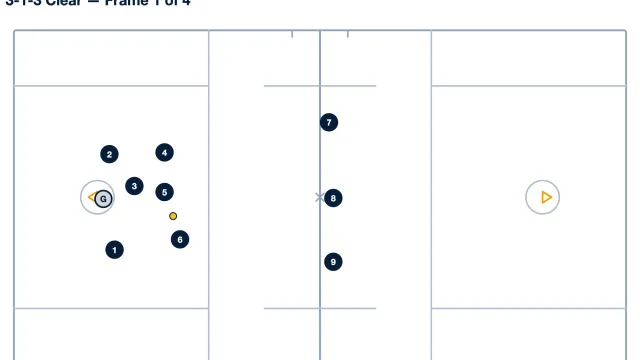
A clear is the process of moving the ball from the defensive end of the field into the offensive end.
Clears commonly begin after:
A goalie makes a save
A defender picks up a ground ball
An opponent misses a pass
A shot goes out of bounds
A defensive team gains possession
The clearing team is immediately challenged by the opposing team's ride, which attempts to prevent the ball from advancing upfield.
A strong clear gives your team another chance to attack. A failed clear can give the opponent another possession and force your defense to remain on the field.
Why Clearing Matters
Clearing efficiency affects how often your team gets opportunities to score.
A team that consistently clears the ball can quickly transition from defense into offense, while turnovers during clears can create dangerous scoring opportunities for the opponent.
The clear also provides opportunities for transition offense. When a team breaks a ride quickly, defenders and midfielders may find themselves running into open space before the opposing defense can recover.
Key Clearing Principles
1. Create Passing Lanes
Players away from the ball should constantly move to create visible passing options.
Standing directly behind a riding player makes it difficult for the ball carrier to find you. Players should work to get into open space where the passer can clearly see their stick.
2. Use the Goalie as a Safety Valve
The goalie can be an important part of the clearing structure.
When a defender is pressured or double-teamed, reversing the ball through the goalie can help move the ride from one side of the field to the other.
The goal isn't always to pass forward. Sometimes passing backward creates the fastest route forward.
3. Keep Moving
Clearing players shouldn't simply run straight upfield.
Players should use changes of direction and cuts to create separation. Midfielders can sprint upfield before cutting back toward the ball carrier, creating a shorter and safer passing lane.
4. Protect the Stick
Players receiving the ball under pressure need to protect their sticks from trailing defenders.
Keep the stick protected, maintain awareness of approaching pressure, and avoid carrying directly into a double team.
Clearing Drills
Banana Curl Breakout
A simple clearing progression is the banana curl.
After the goalie makes a save, defenders sprint upfield while curving toward the outside. Rather than running directly away from the goalie, the curved route allows the player to keep their body and stick positioned toward the ball.
Coaching cue: Keep the stick up and provide the goalie with a clear target.
Avoid drifting all the way into the corner, where the sideline and end line can become additional defenders.
Reverse the Field
When pressure begins to build on one side, teach players to recognize the opportunity to reverse the ball.
A defender can move the ball back to the goalie or another teammate on the opposite side rather than forcing a pass into the ride.
Coaching cue: Don't force forward progress when the defense is already waiting for you.
Midfield V-Cuts
Midfielders should actively create separation instead of standing at midfield waiting for a pass.
Have the midfielder sprint upfield, plant, and cut back toward the ball carrier.
Coaching cue: Run through the defender before cutting back to the ball.
This creates a shorter passing distance and makes the midfielder a much easier target.
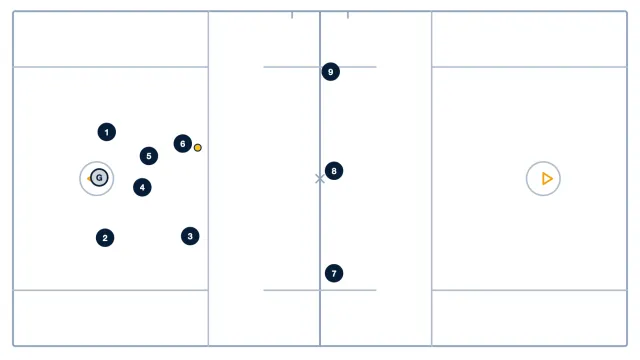
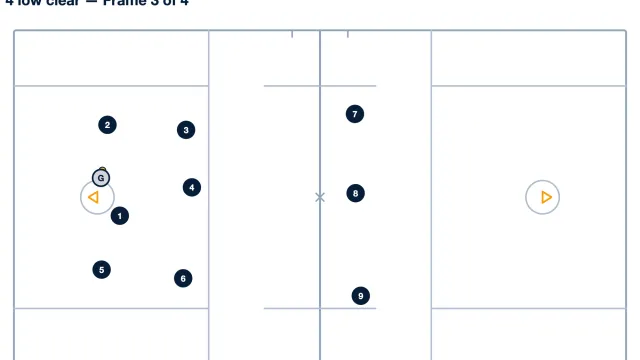
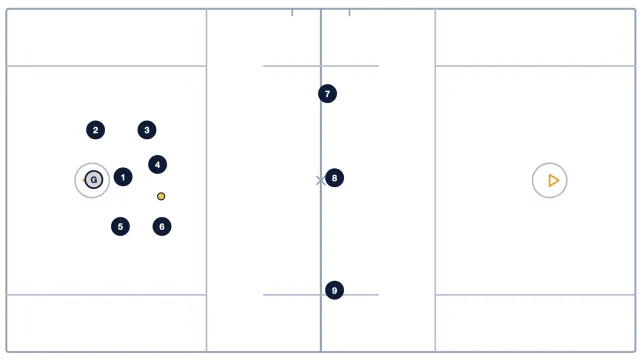
4v3 Clearing Drill
Set up three riding players against four clearing players, including the goalie.
The clearing team must move the ball quickly while the riding team attempts to force a turnover.
This drill teaches players to:
Communicate
Find open space
Move the ball quickly
Draw pressure
Reverse the field
Make decisions under pressure
Don't let the drill become a slow passing exercise. The goal is to recreate the pressure of a real ride.
Coaching Cues to Remember
Keep your clearing instruction simple and repeatable.
For the ball carrier:
Keep your head up.
Don't run directly into pressure.
Protect your stick.
Look away from the pressure.
Use the goalie to reverse the field.
For off-ball players:
Move your feet.
Create passing lanes.
Show your stick.
Cut back toward the ball.
Communicate where you want the pass.
For the goalie:
Communicate early.
Identify the open side.
Be ready to receive a return pass.
Don't force the ball into the middle.
Look for opportunities to start transition.
Common Clearing Mistakes
One of the biggest mistakes young players make is standing still.
A clear requires everyone to participate. If one player is covered, another player needs to move into a better passing lane.
Another common mistake is running directly toward the sideline. This can create a trap because the boundary becomes an extra defender.
Players also need to avoid panicking when pressure arrives. The answer isn't always to throw the ball as far as possible. Often, the better solution is a short pass, a reset, or a reversal through the goalie.
Turn Defensive Stops Into Offense
The best clears don't simply prevent turnovers—they create opportunities.
A goalie save followed by a quick, organized clear can catch the opposing team before its defense is fully organized. That transition can lead to a numbers advantage and an immediate scoring opportunity.
Ultimately, clearing is a team skill. It requires stick work, spacing, communication, movement, and lacrosse IQ from everyone on the field.
Teach players to stay composed, move with purpose, and trust the next pass. When those habits become automatic, clearing stops being a stressful defensive situation and becomes the beginning of your offense.
Discussion
Comments (0)
No comments yet.
Log in with an active subscription to comment.
Log in