
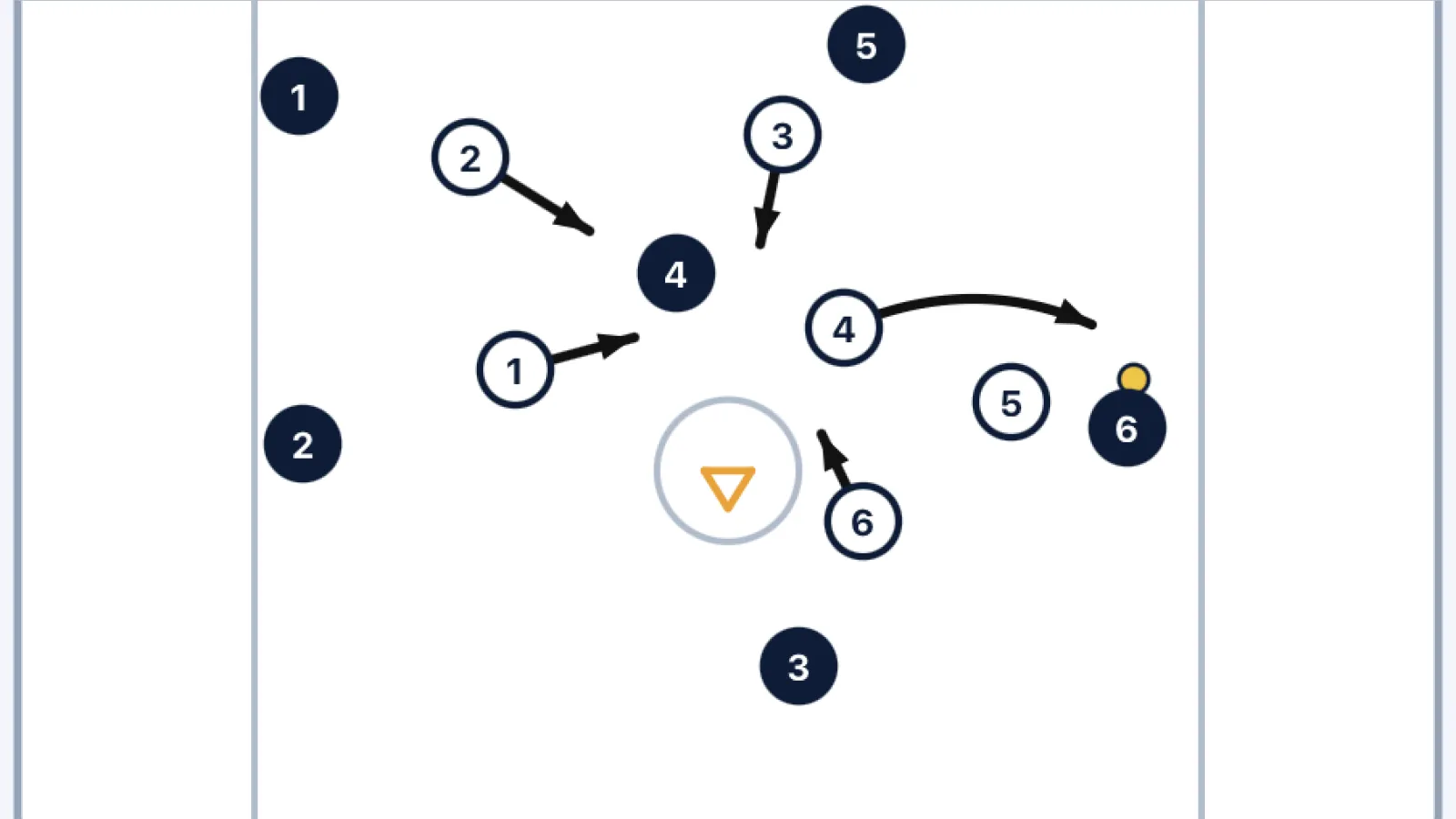
“Slide early and slide often” works because a boys’ lacrosse defense is usually stronger when it acts first instead of waiting for the dodger to dictate the action. It is a philosophy built around trust, decisiveness, and collective responsibility. Instead of asking every defender to identify the perfect moment to slide, the instruction is simpler: when it is your turn, go—and trust the rest of the defense to support you.

The philosophy is not about sliding recklessly or chasing the ball all over the field. It is about stopping a dodger before he reaches a dangerous area, forcing the offense to make decisions earlier than it wants to, and keeping all six defenders actively involved in every possession.

The Basic Idea

  • The first slide comes before the dodger reaches a dangerous shooting area and is already a threat.

  • The slide arrives fast and under control, not as a desperate collision.

  • The on-ball defender stays engaged and helps create a temporary double team.

  • The remaining defenders slough inside to protect the most dangerous areas.

  • The second slides is identified and ready.

  • If the offense moves the ball, the defense communicates, rotates, recovers, and prepares to slide again.

The first slide should trigger the entire defense. One player goes, five players react, and the unit moves together.

Why Slide Early?

It removes hesitation

One of the greatest problems for a defense is waiting for the perfect time to slide. The sliding defender takes one step forward, second-guesses himself, and then arrives too late. By that point, the dodger may already have his hands free in the middle of the field.

Sliding early simplifies the decision. Once the dodger commits and enters the designated area, the slide goes. The defender does not have to solve every possible outcome before acting. His teammates are responsible for supporting the space he leaves behind.

It stops momentum

A dodger running downhill becomes much harder to defend once he reaches full speed. If the defense waits until he is already near the goal, the slide often becomes a desperate attempt to prevent a shot.

An early slide meets the dodger before he becomes truly dangerous. It stops his momentum, prevents him from getting his hands free in the middle, and forces him to change direction or move the ball.

It forces earlier decisions

Most dodgers have a preferred sequence. They want to beat their defender, reach a specific area, draw help, and then shoot or make a predictable pass. An early slide interrupts that sequence.

The dodger now has to make a decision before reaching the spot he wanted. He may have to pull the ball out, redirect his dodge, or pass before his teammates are ready. Instead of the defense reacting to the offense, the offense must react to the defense.

It lets the on-ball defender be more aggressive

When defenders know that help is coming, they can play with greater confidence and apply more pressure to the ball. They do not have to defend as if getting beaten means giving up an uncontested shot.

That does not excuse poor individual defense, but it reinforces an important truth: team defense is not six separate one-on-one matchups. A player may beat one defender, but he should not be allowed to beat the entire defense.

Why Slide Often?

The word “often” does not mean constantly double-teaming or sending defenders at the ball without discipline. It means this means an early slide is not a one time option for a singular player but rather a regular team philosophy during a given possession.

After the offense moves the ball, the defense recovers, reorganizes, and prepares to help again. The offense may survive the first slide. It may even survive the second. But repeated, organized slides create cumulative pressure. Eventually, that pressure can produce a rushed pass, a poor angle, a dropped ball, or a bad decision.

The goal is to make the offense execute one more pass, survive one more rotation, and solve one more problem.

It Activates the Entire Defense

This philosophy creates an active defense instead of six players standing around and watching one defender handle a dodge. Players are constantly:

  • Communicating the first and second slides.

  • Sloughing toward the middle.

  • Protecting the crease and other dangerous areas.

  • Anticipating the next pass.

  • Rotating to new responsibilities.

  • Recovering to the inside before extending back out.

  • Preparing to slide again.

The first slide is only the beginning of the defensive action. The success of the slide depends on what the other five defenders do next.

It Creates Double Teams

When the on-ball defender stays engaged and the sliding defender arrives under control, the defense can create a natural double team. The dodger is briefly trapped between two defenders, reducing his space and making it more difficult to protect his stick or see the field.

These double teams can create turnovers, but the defense should not become obsessed with taking the ball away. The first job is to stop penetration. A rushed or redirected pass can be a successful result because it allows the defense to recover and prepare for the next action.

When This Philosophy Works Best

Sliding early and often can be especially effective against offenses that:

  • Rely heavily on one-on-one dodging.

  • Hold the ball too long.

  • Move the ball slowly.

  • Dodge with their heads down.

  • Lack strong off-ball movement.

  • Struggle to throw skip passes.

  • Depend on one or two players to create most of their offense.

Against these teams, the early slide attacks the foundation of their offense. If their primary plan is for a dodger to beat his man and go directly to the goal, the defense sends a clear message: you may beat one of us, but you are not beating all six of us.

What the Defense Must Be Careful About

This philosophy has risks. It can become a major problem when defenders slide without support or when the offense is capable of moving the ball faster than the defense can rotate.

Teams that move the ball well

A disciplined offense can punish early slides by moving the ball before the defense completes its rotation. This is particularly dangerous against teams that can reverse the field quickly with two passes.

The first pass moves the ball away from the slide. The second pass attacks the backside before the defense can recover. Suddenly, the offense has moved the ball from a crowded area to an open player with time and space.

Skip passes and backside exposure

When defenders slough inside to support the slide, backside offensive players may be temporarily uncovered. A skilled dodger who keeps his head up can find those players with a skip pass.

The defense must protect the inside first, but it also needs to recognize which passes are most dangerous. Defenders cannot become so consumed with collapsing that they lose awareness of the backside.

One player cannot do it alone

The greatest danger is having one aggressive sliding defender surrounded by five spectators. If one player slides while everyone else remains attached to his original man, the defense creates an open player without providing any protection for the space the sliding defender abandoned.

Every time the first slide goes:

  • The other defenders must recognize it immediately.

  • The defense must slough inside.

  • The crease and other dangerous areas must be protected.

  • The second slide must be ready.

  • Players must communicate changing responsibilities.

  • The defense must recover as soon as the ball moves.

One defender cannot play an aggressive team system by himself. If one player slides early but the rest of the defense is late, the philosophy will fail.

Sliding out of control

Sliding early does not mean flying at the dodger and taking yourself out of the play. The sliding defender must arrive balanced, break down, and prevent the dodger from running or rolling past him.

A reckless slide can be as damaging as a late slide. The goal is to stop and contain the dodger, not simply collide with him.

Slow recovery

Once the ball leaves the double team, defenders cannot stand and admire the pass. They must release, communicate, recover to the inside, and locate the next threat.

Sliding often only works if the defense is equally committed to recovering often.

The Philosophy Behind It

At its core, “slide early and slide often” is about eliminating indecision and replacing it with trust. The sliding defender trusts that his teammates will support him. The second slide trusts that the backside will rotate. The on-ball defender trusts that he can apply pressure without being abandoned if he gets beaten.

The defense accepts that an early slide may force it to rotate and solve another problem. That is not a failure. That is the system working. The objective is to prevent the offense from reaching its preferred scoring areas and force it to keep making difficult decisions.

The philosophy can be summarized in two coaching phrases:

Slide before the dodger becomes dangerous, recover before the offense can punish you, and be ready to do it again.

When one defender goes, everyone moves.

When all six defenders understand those responsibilities, sliding early and often creates an aggressive, connected defense that dictates the possession. When they do not, it creates open players and easy opportunities. The difference is not simply how quickly the first defender slides. It is whether the entire defense is prepared to move with him.