A strong ride starts with one simple idea: offense is the first line of defense.
When your team loses possession, the ride begins. Attackers need to be ready to defend immediately and understand exactly what they are trying to accomplish.
What Is the Goal of the Ride?
Before teaching your team how to ride, define what you want the ride to accomplish.
There are two basic levels:
Level 1: Slow the Ball Down
The first goal is to slow the ball down and give your defensive unit time to get back and set up.
The ride does not always have to result in a turnover. Slowing the clear can be valuable on its own.
Level 2: Go for the Ball
The second goal is to actively pressure the clear and try to force a turnover.
Your players should understand which level you are asking them to execute.
Choose Your Riding Style
There are two basic styles you can use:
Woman-to-woman
Zone
Once you choose your style, make sure your players understand their responsibilities and how they should move as the ball moves.
Build a Clear Plan
Your team should know what to expect when the opponent has the ball.
Teach your players the patterns they will see during the clear and how they can anticipate what happens next.
You should also:
Draw up how you want players to shift when the ball moves.
Decide whether you want to pressure the goalie based on your personnel.
If your midfielders are running the box, determine how that affects your ride.
The more clearly you define these responsibilities, the easier it is for your players to react during a game.
Ride Communication
Communication is one of the most important parts of a successful ride.
When your team loses the ball, someone should immediately call "Ride!"
Players should also communicate the location of the ball.
Examples include:
"Ball goalie!"
"Ball's out!"
"Ball's right!"
"Ball's middle!"
"Ball's left!"
Players should also call out the number of the opponent they are responsible for.
This helps everyone understand who is covering whom and prevents two defenders from marking the same player.
Riding Fundamentals
There are a few basic rules every player should follow.
Get Goal-Side
Get between your player and the goal you are defending.
Your job is to make it difficult for your opponent to move toward the goal and receive the ball.
Stay Tight
Stay tight to your player, ideally less than a stick's length away.
Giving the opponent too much space makes it easier for them to receive a pass or make an open-field dodge.
Shift With the Ball
As the ball moves down the field, shift down and toward the ball.
The ride should move together rather than leaving large gaps between players.
Common Riding Mistakes
There are also a few things players should avoid.
Don't Mark the Same Player as a Teammate
If you find yourself marking the same player as a teammate, communicate.
Everyone needs to know their assignment.
Don't Slide to the Ball When Your Player Is Downfield
If your player is farther downfield toward your goal, don't automatically slide toward the ball.
This can create what is known as the "monkey in the middle pass."
Don't Give Too Much Space
Avoid giving your opponent enough room to comfortably receive a pass or make an open-field dodge.
Stay connected and make the clear difficult.
Ride Drills
Once players understand the basic principles, use drills to build the individual and team skills needed for the ride.
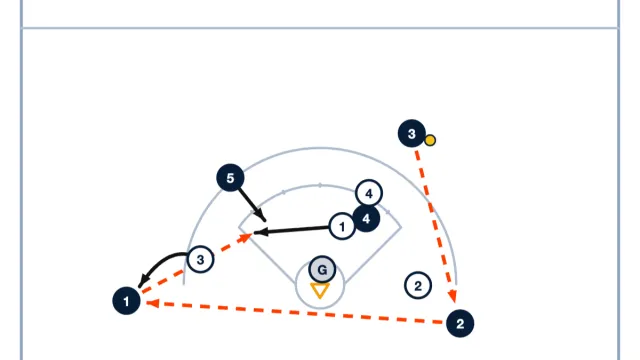
Lane Drill
The Lane Drill can be used to teach individual skills that help players force the ball during the ride.
This is an important building block for the team ride.
The drill works with the field divided into different lanes and levels, helping players understand positioning and where they need to be as the ball moves.
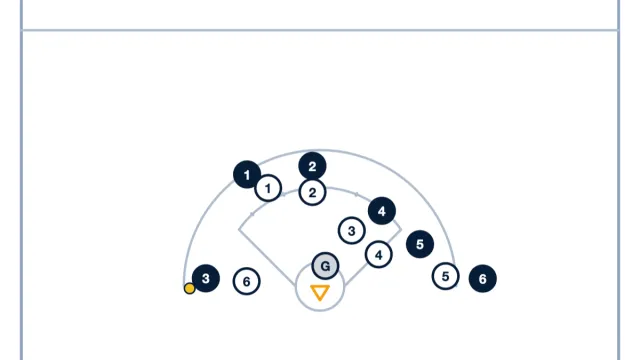
Muddle Transition Drill
The Muddle Transition Drill works on the transition from the defensive end into the clear and ride.
Setup
Set up 7v7 inside the 8m, with a goalie inside the goal and a coach in front of the crease with a ball.
On the first whistle, the defense and offense begin jogging around inside the 8m, mixing themselves up.
After a few seconds, the coach "shoots" the ball at the goalie's stick to initiate the clear/ride.
The goalie calls "Clear!" and the riding team should call "Ball Goalie!" as soon as they see the shot go into the goalie's stick.
The clearing team breaks out into a standard clear pattern, with four defenders going to four low spots below the 30 and three middies breaking up the field.
As the clearing team breaks out, the riding team calls out the nearest mark, making sure no one is calling out the same number.
As the defenders break out to their clearing positions, the riding team should stay goal-side of their defensive assignment so they can see both the opposing goalie with the ball and their mark in front of them.
3v3v3 Transition Drill
This drill adds multiple groups and works on recognizing the clear and transitioning into the ride.
Setup
Set up a goalie in each cage with balls and three sets of 3v3 in each third of the field. One group is below each restraining line and one group is between the restraining lines.
Each 3v3 group stays within its designated area. Each group starts together in a smaller space inside the 8m and center circle and breaks out on the clear.
The goalie on one side looks to clear to their defense. The defense and offense mark up and begin the ride when the goalie calls "Clear!"
When the goalie calls clear, the clearing team breaks out on different lanes and levels.
Lanes & Levels Clearing Drill
The Lanes & Levels Clearing Drill focuses on getting players to break out into different lanes and levels when the goalie initiates the clear.
Setup
Set up a goalie in each cage with balls and three sets of 3v3 in each third of the field. Each group stays within its designated area.
Each 3v3 group starts together in a smaller space inside the 8m and center circle and breaks out on the clear.
The goalie on one side looks to clear to their defense. The defense and offense mark up and begin the ride on the goalie's "Clear!" call.
When the goalie calls clear, the clearing team breaks out on different lanes and levels.
Put It All Together
A good ride starts with clear expectations.
Your players need to know:
What the goal of the ride is
What riding style you are using
Who they are responsible for
Where they need to be
How they should shift
What they should communicate
Start by teaching the individual skills, then progress into transition drills where players have to communicate, recognize the clear, stay goal-side, and work together.
The goal is not simply to chase the ball. A successful ride is organized, connected, and purposeful.
Discussion
Comments (0)
No comments yet.
Log in with an active subscription to comment.
Log in