
Objective
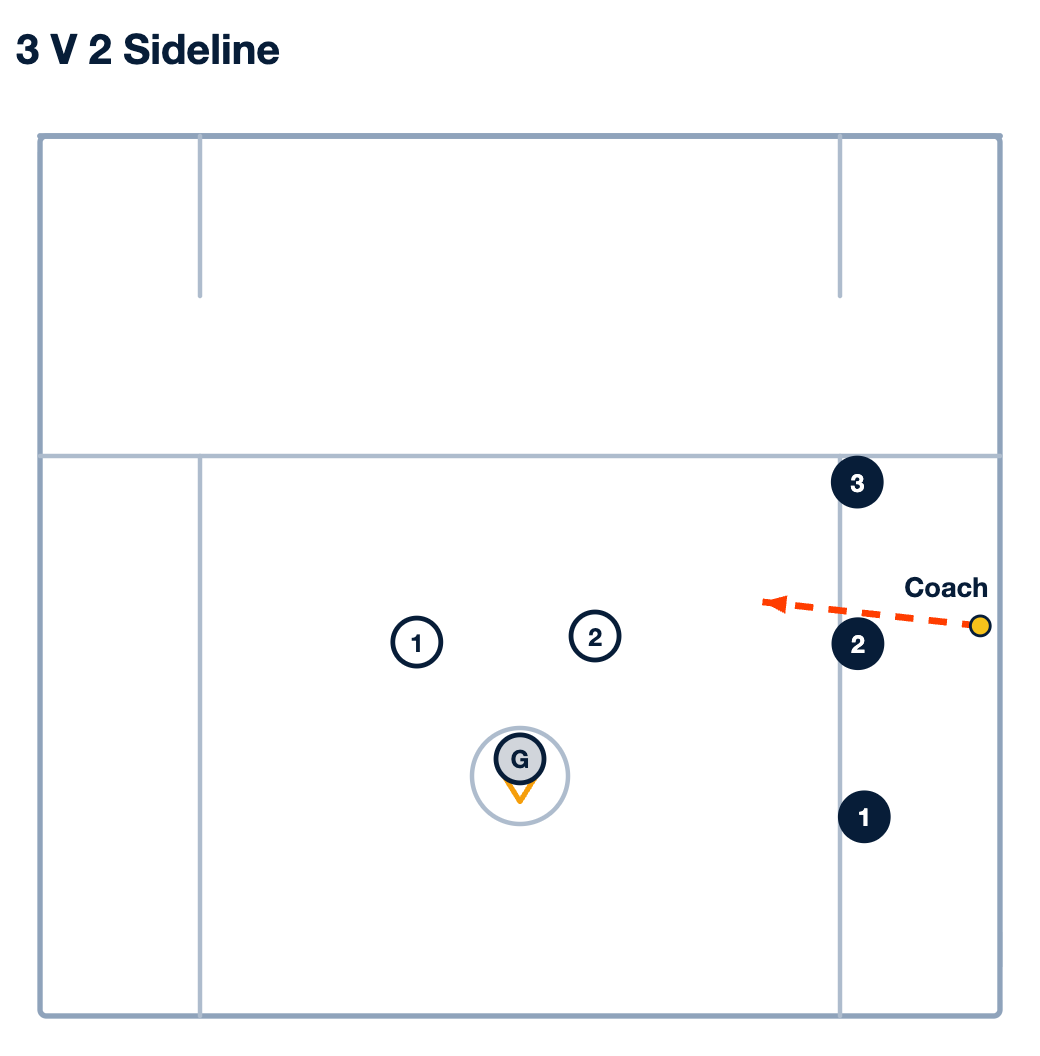
The goal of this drill is to teach offensive players how to create and attack opportunities when working with limited space and a numerical advantage.
Because the offense cannot cross into the opposite half of the field, players must make smart decisions with their positioning, stick work, and movement.
Setup
The coach rolls a ball out to initiate the drill.
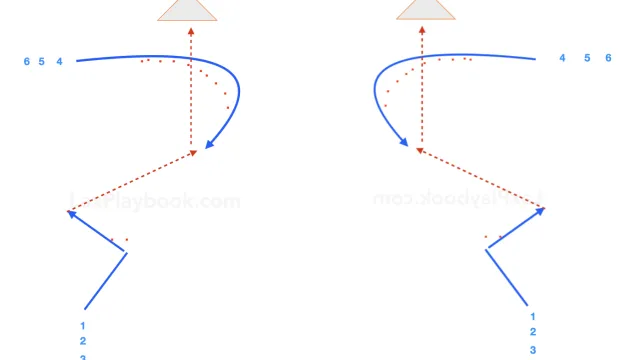
Three offensive players attack the goal from the sideline against two defenders positioned in an "I" formation in front of the goal.
The offensive players must stay within their designated half of the field throughout the drill.
How It Works
Once the coach rolls out the ball, the three offensive players immediately attack.
With a 3 v 2 advantage, the offense should look to create passing and shooting opportunities by moving the defense and attacking open gaps.
The restricted playing area makes spacing especially important.
Players should avoid bunching up and instead maintain enough separation to force the defenders to make decisions.
The offense should look for opportunities to:
Attack open gaps
Move the ball quickly
Create passing lanes
Use effective stick work
Communicate with teammates
Get tight, controlled shots on goal
Key Coaching Points
Attack the Gaps
Don't simply run toward the defender. Look for the space between defenders and attack it with purpose.
Maintain Spacing
The sideline restriction makes spacing even more important. Give the ball carrier room to dodge while staying available for a pass.
Communicate
Players should constantly communicate where they are and where they want the ball. Clear communication can create passing opportunities before the defense has time to adjust.
Finish Tight
Players should focus on controlled shooting opportunities rather than forcing low-percentage shots from difficult angles.
Why This Drill Works
The 3 v 2 setup gives the offense a numerical advantage, but the restricted space prevents players from simply spreading across the entire field.
That forces players to recognize gaps, create space for teammates, and make quicker decisions.
Discussion
Comments (0)
No comments yet.
Log in with an active subscription to comment.
Log in