
For years, a lot of offenses looked the same. One player dodged, the defense slid, and the team hoped the next pass found an open shooter. Sometimes it did. Against a good team, though, a dodge-and-slide offense turns into one player against seven, and the slide usually wins.
The fix came from box lacrosse. Box teams play off two-player actions: pick-and-rolls, give-and-gos, and seals. Two attackers working together put stress on two defenders at once. Instead of a long list of plays, coaches can teach players a few decisions they can make in any set.
The five principles
Take care of the ball. A possession that ends without a shot is a lost chance. If nothing is there, reset and go again.
Create good shots, not just open ones. Being open enough to catch isn't the same as having a good angle and a stick ready to shoot.
Work with a teammate. Every time the ball moves, someone should be setting a pick, cutting, or sealing for the ball carrier.
Provide an outlet. The ball carrier should never be stuck. Somebody needs to be wide and available.
Read the defense. The defense tells you what's open. A switch, a double, or a defender who trails the play each opens something different.
Why this works
Principles travel. A play works against one defense, but "give her an outlet" works against all of them. Players also stop waiting for a call from the sideline. They see a defender cheat and they punish it.
Coaching tips
Name the principles out loud in practice. "Who's her outlet?" is a faster correction than redrawing a play.
In film sessions, freeze the frame and ask which principle was missing.
With younger groups (U10 and U12), focus on outlets, cuts, and ball care. Add picks once your league's rules and your players' skills allow it.
What each principle looks like in a game
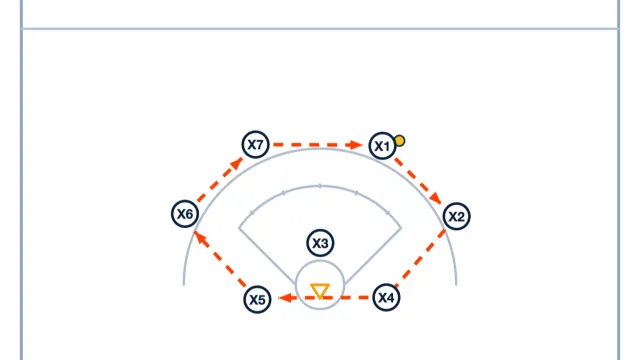
Take care of the ball. A player drives, the slide comes, and nothing is open. Instead of forcing a pass into traffic, she pulls the ball back out and resets. The offense keeps the ball and gets another chance.
Create good shots. A cutter catches on the doorstep but at a sharp angle, with her stick on the outside. Instead of throwing a low-percentage shot, she moves the ball to a teammate who has the whole cage to shoot at.
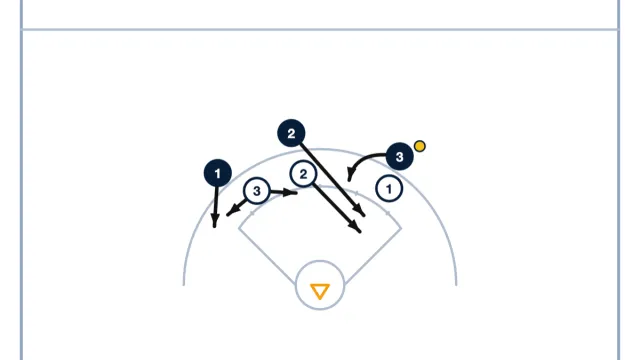
Work with a teammate. The ball goes to the wing. Right away a teammate moves toward her to set a pick, and another fills the space behind them. Nobody stands and watches.
Provide an outlet. The ball carrier gets pressured near the sideline. A teammate is already wide and calling for it, so the pressure turns into a quick pass instead of a turnover.
Read the defense. On a pick, the two defenders switch. The picker sees it and slips to the cage, because the defense just told her she's the open player.
Common mistakes when switching to a principles offense
Too many rules at once. Start with two principles, such as "provide an outlet" and "work with a teammate." Add the others once those become habits.
No shared language. If players and coaches call the same thing by different names, the reads break down. Pick your terms and use them every day.
Taking away all structure. Principles still need a starting alignment. A simple set gives players spacing to work from.
Judging only by goals. Early on, praise good decisions even when the shot misses. That's how the habits stick.
How it looks at different levels
U10 and U12: Focus on ball care, outlets, and moving after a pass. Use cuts instead of picks.
U14: Add legal on-ball picks and simple reads like the slip and the give-and-go.
High school and college: Layer in Nations looks, off-ball seals, and reading switches and doubles in real time.
Quick checklist
Every player can name the five principles.
Every possession has at least one two-player action.
The ball carrier always has an outlet.
Players reset instead of forcing a bad shot.
Discussion
Comments (0)
No comments yet.
Log in with an active subscription to comment.
Log in