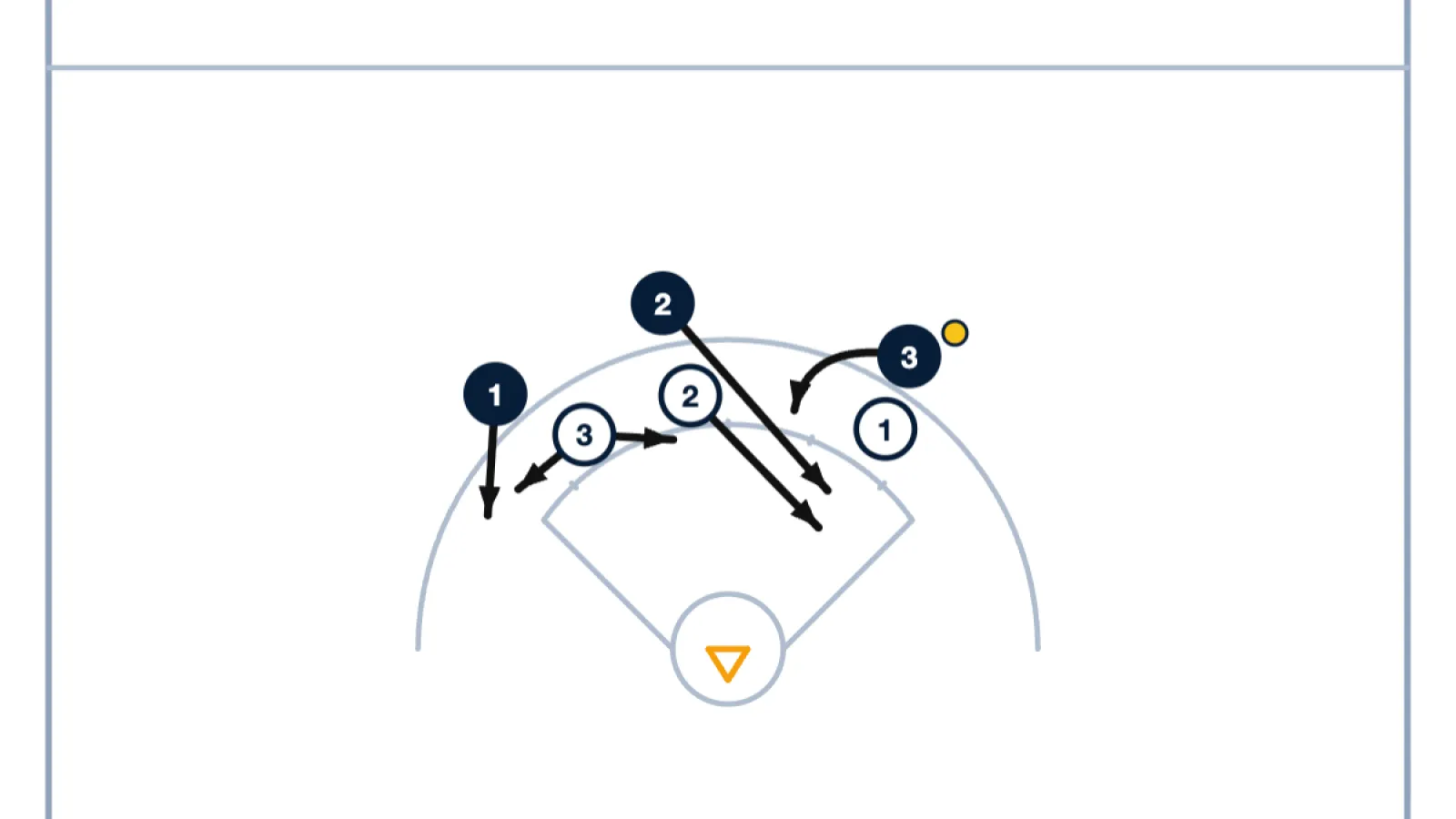
Moving the ball with pace and purpose is a key part of creating offensive opportunities. The goal is to get the defense moving and tired, create longer slides, and make every player a threat when she gets the ball.

Spacing, Timing, and Communication

Good spacing creates gaps for offensive drives and off-ball cuts. It also allows players to attack different spots on the field. Timing creates opportunities for both the ball carrier and off-ball players while helping offensive actions work effectively. Communication keeps everyone on the same page and can also happen through silent communication.

Move the Ball With Purpose

Move the ball faster than the defense can adjust. The goal is not simply to pass the ball around the arc. Players should move with purpose and remain a threat both on and off the ball.

Moving the ball twice after attacking can help create better opportunities. When driving to feed, use draw and dump and move the ball again rather than forcing the first option.

Attack or Pass?

Players should use visual cues from the defense to decide whether to attack or pass.

Look at the on-ball defender's:

  • Feet placement

  • Hip angles

  • Lock-down defense

Also pay attention to off-ball cues, including:

  • Ball watching

  • Slide distance

  • Defensive recovery

These cues help the ball carrier recognize when there is an opportunity to attack and when moving the ball is the better decision.

Use Two-Man Concepts

Two-man concepts can create small advantages within the offensive structure. They can help isolate the defense's ball focus to the ball side and open opportunities for back-side slips.

Some examples include:

  • Pick

  • Pick to slip

  • Flip

  • Flip to slip

  • Fade to flash

  • Mirroring

The goal is to use these actions to create an advantage rather than simply running a play for the sake of running it.

Build Lacrosse IQ

The offense should reinforce the ability to read the game rather than simply follow a set.

Players should learn to:

  • Know when to attack versus pass

  • Attack gaps

  • Drive to feed

  • Move the ball twice

  • Think ahead

  • Play off the defense

  • Encourage creativity

  • Avoid sticking to the play when the defense gives a different opportunity

The goal is to see the field, not just the defender, and create small advantages that can lead to bigger opportunities.