Slashing is one of the most important fouls for lacrosse players to understand, particularly for defenders learning to make legal stick checks.
A slash generally involves swinging or striking with the crosse in an illegal or dangerous manner. In the 2026 USA Lacrosse boys' youth rules, slashing includes swinging a crosse at an opponent's crosse or body with deliberate viciousness or reckless abandon, whether or not contact actually occurs. The rules also specifically address contact with an opponent's head during an active stick check.
The exact definition and penalty can vary depending on whether you're playing men's, women's, youth, high school or collegiate lacrosse.
What Is Slashing in Lacrosse?
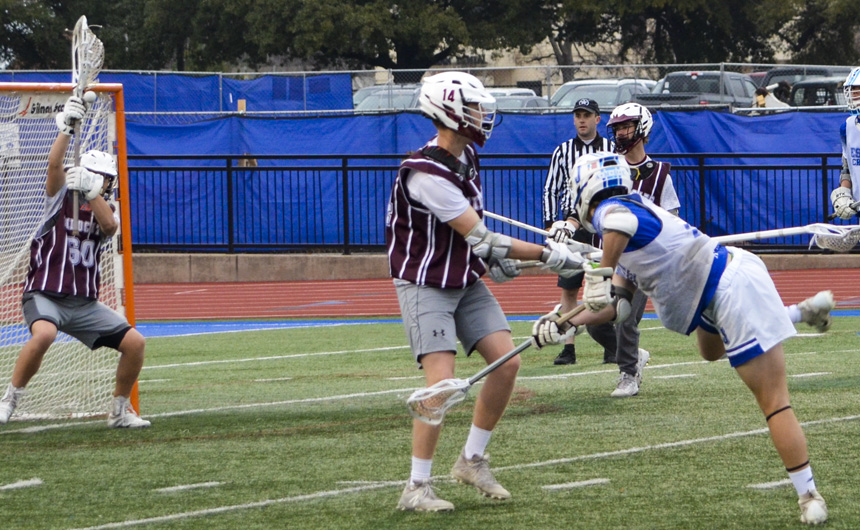
In men's and boys' lacrosse, slashing is generally associated with an uncontrolled, reckless or illegal stick check.
A legal defensive check is intended to dislodge the ball or disrupt an opponent while remaining within the rules. A player who swings recklessly at an opponent's body can instead be called for slashing.
Importantly, a slash does not necessarily require the stick to make contact. Under the 2026 USA Lacrosse boys' youth rules, swinging the crosse at an opponent's crosse or body with deliberate viciousness or reckless abandon can constitute slashing even when contact does not occur.
What Counts as a Slash?
Common examples include:
Reckless Stick Swings
A defender takes a large, uncontrolled swing at an opponent instead of making a controlled stick check.
Striking the Body
A stick check that strikes an opponent's body in an illegal manner can result in a slashing call.
Contact to the Head
Head contact during an active stick check is treated particularly seriously. The 2026 boys' youth rules specifically state that contact of any degree made to an opponent's head while actively making a stick check is a slashing penalty.
Checking Without Control
A defender who loses control of the crosse and makes a reckless chopping or swinging motion can put both players at risk and may be penalized even if the intended target was the opponent's stick.
What Is a Legal Stick Check?
The goal isn't to eliminate stick checking from lacrosse. Players are expected to learn controlled checking techniques appropriate for their level.
Good defensive habits include:
Establishing body position before relying on the stick
Using controlled pokes and lifts when appropriate
Keeping checks targeted and deliberate
Maintaining awareness of where the opponent's body is
Avoiding uncontrolled swings
Following the checking rules for your age group and league
Youth rules can be more restrictive than adult rules. For example, USA Lacrosse's 2026 boys' youth rules specify different checking requirements by age and playing format.
What Is the Penalty for Slashing?
There isn't one universal slashing penalty for every lacrosse game.
In men's and boys' lacrosse, slashing is classified as a personal foul, and the penalty can involve time in the penalty area. The precise duration and whether the penalty is releasable or non-releasable depend on the applicable ruleset and circumstances of the foul.
That's why the simple statement that "slashing is always a one-to-three-minute penalty" can be misleading.
NCAA men's lacrosse, NFHS high school lacrosse and USA Lacrosse youth lacrosse have their own rulebooks and modifications. USA Lacrosse specifically maintains separate youth rules for players 14U and below and works with NFHS on high school boys' lacrosse.
What Happens After a Slash?
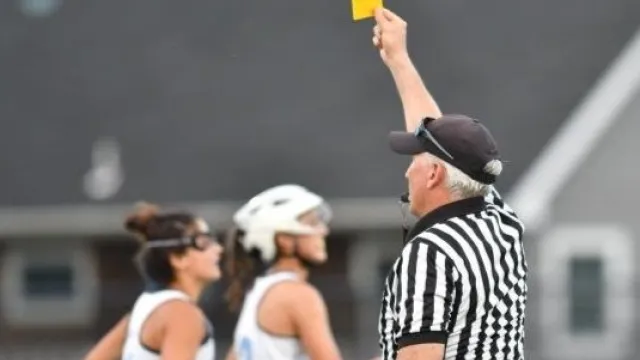
Depending on the ruleset and severity, a slashing call can:
Put the offending player in the penalty area
Give the opposing team a man-up opportunity
Result in a releasable or non-releasable penalty
Become part of a larger disciplinary situation if the contact is particularly dangerous
The penalty can have a major tactical impact. A team that loses a defender to a personal foul may suddenly have to defend a man-down situation.
For 2026 boys' high school lacrosse, USA Lacrosse and NFHS have placed particular emphasis on personal fouls involving contact to the head or neck, reflecting the continued focus on player safety.
Slashing in Women's Lacrosse
Women's lacrosse uses a different rules structure from men's lacrosse, so it is better not to simply apply men's slashing terminology and penalties to the women's game.
Stick and body contact are regulated under the women's rules, with fouls potentially resulting in free positions, cards and other penalties depending on the level and situation. USA Lacrosse maintains separate girls' and women's rules and separate youth rules.
The NCAA women's game is also undergoing rule changes. In July 2026, NCAA committees proposed reorganizing several stick and body contact fouls into illegal check and illegal contact categories. Those changes were proposed for the 2026-27 academic year and were not yet official at the time of the announcement.
So, for women's lacrosse, the better takeaway is simple: illegal or dangerous stick contact can be penalized, but the terminology and enforcement are different from men's lacrosse.
Slashing in Youth Lacrosse
Youth players need to learn legal checking early because good defensive habits become increasingly important as the game becomes more physical.
USA Lacrosse publishes separate youth rulebooks for ages 14U and below, with rules designed around age-appropriate development and safety.
For boys' youth lacrosse, checking restrictions vary by age group. The 2026 rules include specific requirements regarding where and how a player can make contact with an opponent's crosse. For example, youth rules restrict checking around the head and specify different checking techniques depending on age.
That means a check that may be permitted at one level may not be permitted for a younger player.
How to Avoid a Slashing Penalty
The easiest way to avoid slashing is to focus on position first, stick second.
A good defender should:
1. Move your feet.
Stay in front of the offensive player instead of reaching desperately with the stick.
2. Use controlled checks.
Avoid huge swings. A controlled poke or lift is generally easier to execute safely.
3. Know your target.
Don't throw your stick toward an opponent without knowing exactly where it will land.
4. Protect the head and neck.
Never make reckless contact around an opponent's head.
5. Know your ruleset.
Youth, high school, collegiate and women's lacrosse can have different checking rules.
Why Slashing Matters
A slashing penalty isn't just about giving the other team an advantage. Reckless stick contact can cause serious injury, which is why player safety is a central purpose of lacrosse's rules.
USA Lacrosse states that its rules are designed to promote fair play and player safety, and its 2026 boys' rules continue to emphasize dangerous contact and sportsmanship.
For defenders, the best approach is to become difficult to beat without becoming reckless. Good footwork, body positioning, communication and controlled stick checks will make you a more effective defender while reducing unnecessary penalties.

Discussion
Comments (0)
No comments yet.
Log in with an active subscription to comment.
Log in