
The Goal Circle Rule in Women's Lacrosse: What Players Can and Cannot Do
The goal circle, also known as the crease, is a protected area around the goalkeeper in women's lacrosse. It determines where attackers can move, how defenders can protect the goal, and what privileges the goalkeeper has when controlling the ball.
Understanding these rules helps players avoid violations and make better decisions around the goal.
What Is the Goal Circle in Women's Lacrosse?
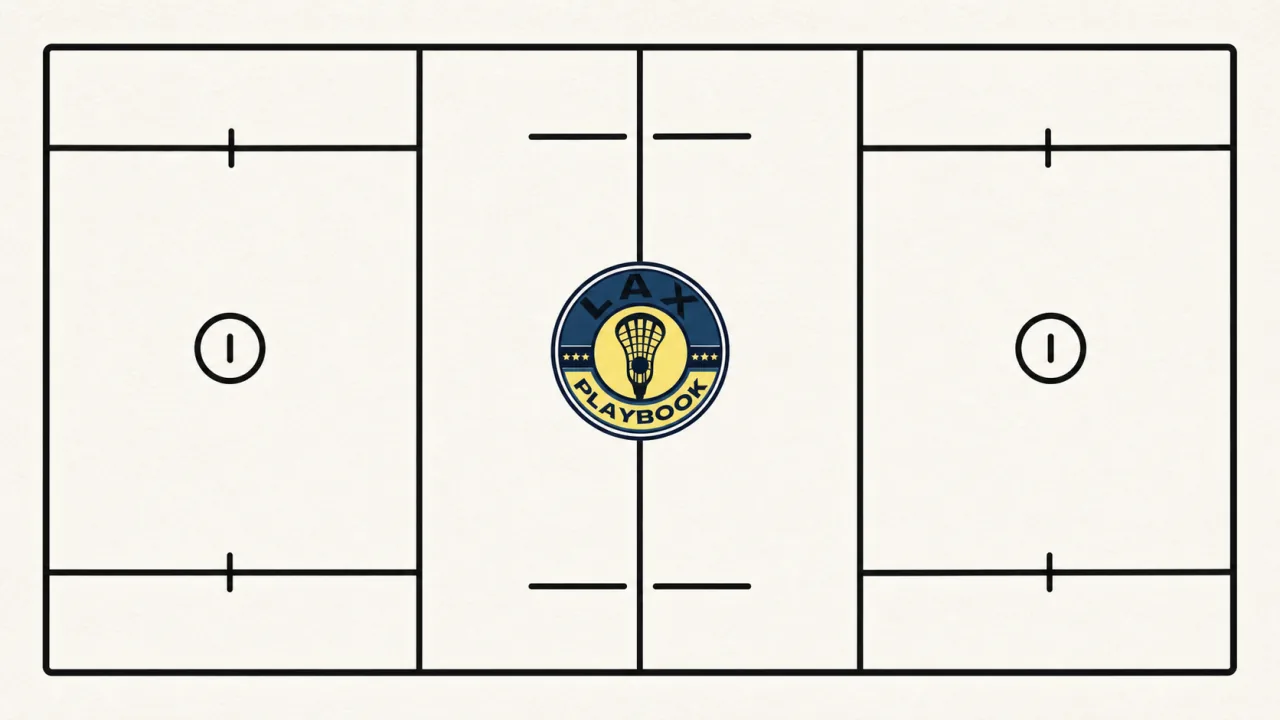
The goal circle is the circular area surrounding the goal. Under the 2026–2027 NCAA women's lacrosse rules, it has a radius of 8.5 feet (2.6 meters), measured from the center of the goal line to the outside edge of the circle.
It provides special protection for the goalkeeper and establishes restrictions for attacking and defending players.
Can Attacking Players Enter the Goal Circle?
No. Attacking players cannot enter or touch the opponent's goal circle during play.
However, there is an important exception when shooting. A player can shoot from outside the circle and allow her stick to follow through over it, provided her feet remain outside the circle.
Attackers also cannot reach into the goal circle with their sticks to collect loose balls or interfere with the goalkeeper.
Can Defenders Enter the Goal Circle?
Yes. Defenders have specific exceptions that allow them to enter the goal circle.
They may:
Run through the circle while defending.
Remain inside while directly marking the ball carrier within a stick's length.
Enter and play the ball when their team has possession.
Enter to prevent a rolling ball from crossing the goal line.
Reach into the circle with their sticks to block a shot or check a shooter's stick, subject to other applicable rules.
These exceptions allow defenders to protect their goal while following the game's positioning and safety requirements.
What Are the Goalkeeper's Privileges?
The goalkeeper has special privileges inside the goal circle that other players do not have.
These include:
Using her body or stick to stop a shot.
Stopping or catching the ball with her hand inside the circle. If caught, the ball must be placed in her stick before play continues.
Receiving protection from interference by attacking players.
The goalkeeper or a defender controlling the ball inside the goal circle must clear it within 10 seconds after the ball enters the circle.
What Happens When a Player Commits a Goal Circle Violation?
The penalty depends on which team commits the violation.
Attacking violation: The defending team receives a free position inside the goal circle.
Defensive violation: The attacking team receives a free position. The restart location depends on whether the defending team had possession when the violation occurred.
These penalties help prevent players from gaining an unfair advantage around the goal.
Common Goal Circle Violations
Game situation | Ruling |
|---|---|
An attacker steps on the circle line while shooting. | Illegal |
An attacker's stick follows through over the circle after a legal shot. | Legal |
A defender runs through the circle while defending. | Legal |
A defender remains inside while directly marking the ball carrier within a stick's length. | Legal |
An attacker reaches into the circle to collect a loose ball. | Illegal |
A defender uses her body to stop a shot inside the circle. | Illegal |
How Can Players Avoid Goal Circle Violations?
Players can avoid unnecessary penalties by following these simple practices:
Watch foot placement when shooting near the goal.
Understand when defenders are allowed to enter the circle.
Respect the goalkeeper's protected space.
Practice defensive recovery and shooting situations.
Communicate with teammates during plays around the goal.
Frequently Asked Questions
1. Can an attacker step inside the goal circle?
No. Attackers cannot enter or touch the opponent's goal circle during play.
2. Can a shooter's stick go over the goal circle?
Yes. A stick can follow through over the circle after a legal shot, provided the shooter's feet remain outside.
3. Can defenders stand inside the goal circle?
Yes. Defenders can enter or remain inside under specific defensive and possession-related conditions.
4. How long does the goalkeeper have to clear the ball?
The goalkeeper or a defender controlling the ball inside the circle has 10 seconds to clear it after the ball enters.
5. What happens if an attacker enters the goal circle?
The defending team receives a free position inside the goal circle.
Final Thoughts
The goal circle rule protects the goalkeeper and keeps play fair around the goal. Attackers must understand the restrictions on entering the crease, while defenders should know when they can legally enter and protect the goal.
For coaches, practicing these situations helps players develop better awareness and avoid unnecessary violations.



Discussion
Comments (0)
No comments yet.
Log in with an active subscription to comment.
Log in