

Offside is a team violation in women's lacrosse that occurs when a team has too many players in its offensive or defensive end of the field. Understanding this rule helps players maintain proper positioning, avoid unnecessary penalties, and keep their team organized during transitions.
Whether you're attacking, defending, or moving between ends of the field, knowing how the restraining lines work is essential to playing within the rules.
What Is Offside in Women's Lacrosse?
In women's lacrosse, offside occurs when a team exceeds the permitted number of players in either its offensive or defensive end.
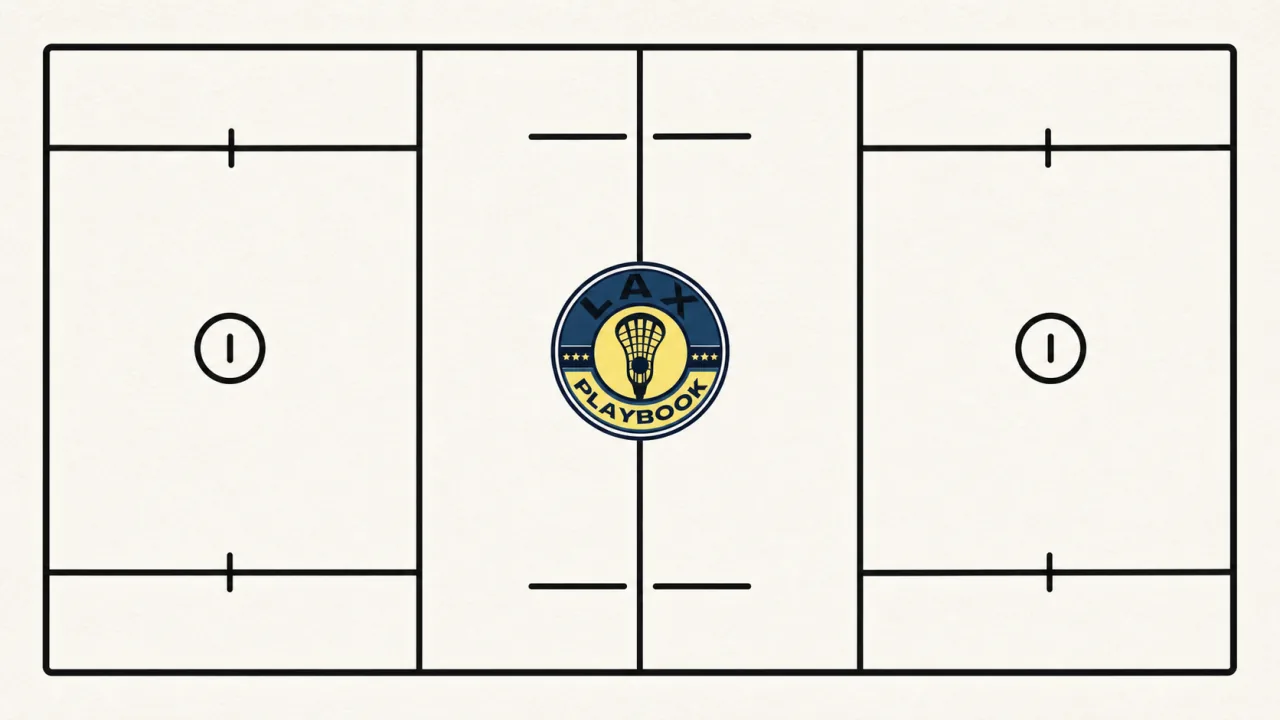
The field has two restraining lines that help control player positioning. These lines determine how many players from each team can occupy each end of the field.
Under NCAA women's lacrosse rules:
A team can have no more than seven players in its offensive end.
A team can have no more than eight players in its defensive end.
Players must stay within these limits throughout the game.
The goalkeeper counts toward the defensive player limit when positioned in that end.
Understanding the Restraining Lines
Restraining lines are located 30 yards from each goal line and extend across the width of the field. They divide the playing area and help officials monitor the number of players in each end.
The field can be understood through three main sections:
Offensive end: The area where a team attacks its opponent's goal.
Defensive end: The area where a team protects its own goal.
Midfield area: The space between the two restraining lines.
Players must be aware of their position relative to these lines, especially when moving between attacking and defending responsibilities.
How Many Players Can Be in Each End?
In NCAA women's lacrosse, each team normally has 12 eligible players on the field, including one goalkeeper.
The offside rule establishes these maximum limits:
Field section | Maximum players |
|---|---|
Offensive end | 7 |
Defensive end | 8 |
These are separate limits for each end. They do not mean that a team must always have exactly seven players attacking and eight defending.
For example, if seven players are already in the offensive end, another teammate cannot enter until one of those players has moved back across the restraining line.
The same principle applies to the defensive end. A team cannot have more than eight players occupying that area.
What Counts as an Offside Violation?
An offside violation happens when a team exceeds the permitted player limit in either end of the field.
Here are some common situations:
1. Too many players enter the offensive end
If a team already has seven players in its offensive end and another teammate crosses the restraining line before someone leaves, the team has exceeded the limit.
2. Too many players enter the defensive end
If a team already has eight players in its defensive end and another teammate crosses the restraining line, an offside violation occurs.
3. A player steps on or over the restraining line
A player commits an offside violation when any part of their foot touches or crosses the restraining line in a way that exceeds the permitted player limit.
However, players may reach over the line with their sticks to play the ball, provided no part of their body is grounded on or over the line.
Can Players Switch Positions Across the Restraining Line?
Yes. Players can exchange positions across the restraining line during live play, but they must follow the correct order.
The player leaving an end must have both feet behind the restraining line before a teammate can cross into that end.
For example, if a midfielder wants to move into the offensive end, an attacking player must first move back across the restraining line. Once that player has both feet behind the line, the midfielder can enter.
This prevents teams from temporarily exceeding the permitted player limit during transitions.
Communication is important during these exchanges. Players should call out when they are moving back or entering an end to avoid accidental violations.
What Happens When a Team Is Called Offside?
An offside violation results in a penalty and a free position for the opposing team.
Under the 2026–2027 NCAA women's lacrosse rules, the penalty includes:
A green card issued to the offending team.
A one-minute releasable penalty served by a player from the offending team.
A free position awarded to the opposing team.
Correction of the offside positioning before play resumes.
The location of the free position depends on where the ball was when the violation occurred.
For example:
Outside the critical scoring and dot restart areas: The opposing team receives a free position at the spot of the ball.
Inside the critical scoring area: The free position is awarded at the top center of the 12-meter fan.
Inside the dot restart area: The free position is awarded at the nearest dot.
If both teams commit offside violations at the same time, officials correct the positioning and award alternate possession instead.
How Can Players Avoid Offside Violations?
Avoiding offside violations requires awareness, communication, and proper positioning.
Here are five ways players can stay onside:
Know your position: Understand your responsibilities in the offensive and defensive ends.
Communicate during transitions: Let teammates know when you are moving back or entering another end.
Watch the restraining line: Pay attention to your foot placement when crossing between areas.
Coordinate player exchanges: Make sure the player leaving an end has both feet behind the restraining line before another teammate enters.
Practice transition drills: Work on moving between offensive and defensive positions without exceeding the player limits.
For coaches, incorporating restraining line awareness into transition drills helps players develop better field awareness and reduce unnecessary penalties.
Frequently Asked Questions
1. How many players can be in the offensive end in women's lacrosse?
A team can have a maximum of seven players in its offensive end under NCAA women's lacrosse rules.
2. How many players can be in the defensive end?
A maximum of eight players can occupy the defensive end, including the goalkeeper when positioned there.
3. Can a player reach over the restraining line with her stick?
Yes. A player can reach over the line with her stick to play the ball, provided no part of her body is grounded on or over the line.
4. Can players switch positions across the restraining line?
Yes. Players can exchange positions during play, but the player leaving an end must have both feet behind the restraining line before a teammate enters.
5. Is offside considered a foul in women's lacrosse?
Yes. Offside is a team violation that results in a penalty and a free position for the opposing team.
6. Does offside apply throughout the game?
Yes. Teams must follow the restraining line restrictions throughout play, not just during draws or specific game situations.
Final Thoughts
Understanding offside in women's lacrosse helps players maintain proper positioning, coordinate transitions, and avoid unnecessary penalties.
Every player should know the restraining line limits and communicate with teammates when moving between offensive and defensive ends.
For coaches, teaching these rules during practice can help teams develop better discipline, improve transitions, and maintain their structure throughout the game.



Discussion
Comments (0)
No comments yet.
Log in with an active subscription to comment.
Log in