
Soccer cleats can be worn for lacrosse, and some players do use them. However, lacrosse and soccer place different demands on footwear, so there are several differences to consider before choosing soccer cleats for the field.
The biggest differences involve traction, stud configuration, ankle design, durability, and movement support. Understanding these differences can help you decide whether soccer cleats are suitable for your position and playing surface.
Can You Wear Soccer Cleats for Lacrosse?
Yes, soccer cleats can be used for lacrosse, provided they comply with your league's equipment rules and are appropriate for the playing surface.
Soccer cleats can be appealing because they are generally lightweight, flexible, and comfortable. They can work particularly well for players who value freedom of movement and already have experience wearing soccer footwear.
However, dedicated lacrosse cleats are designed around the cutting, acceleration, lateral movement, and physical contact common in lacrosse.
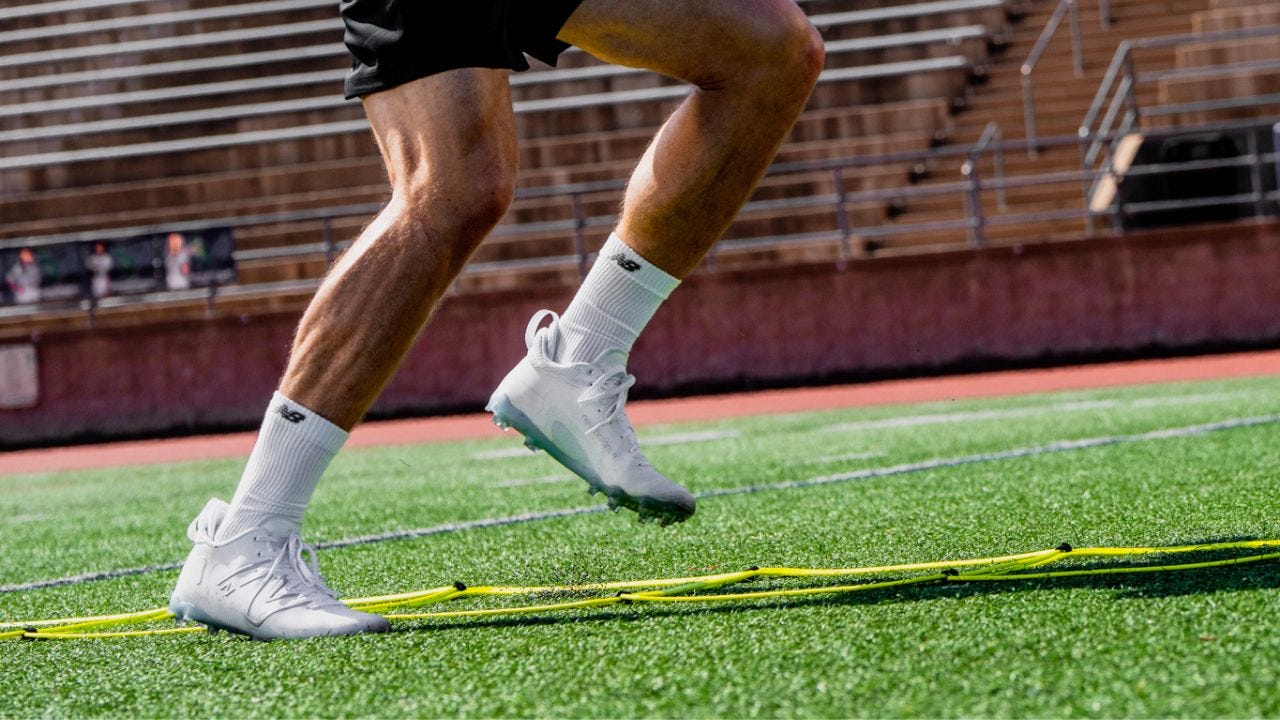
Lacrosse Cleats vs. Soccer Cleats
Ankle Support
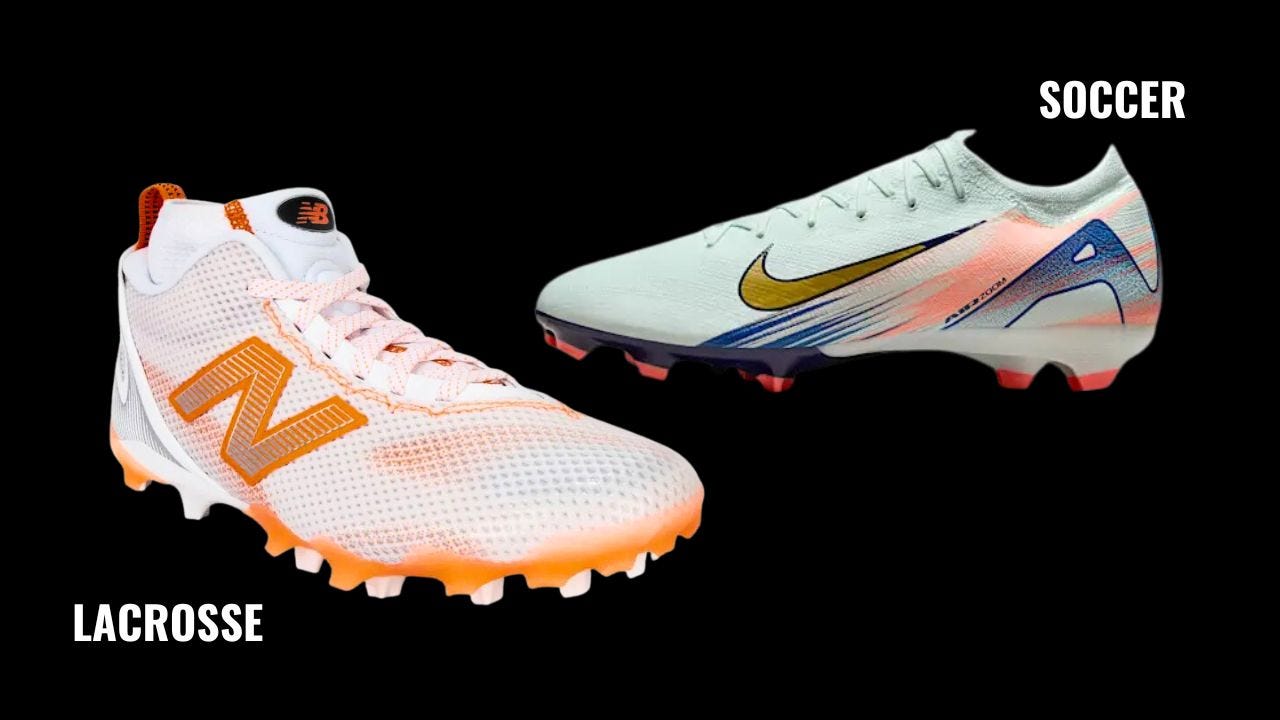
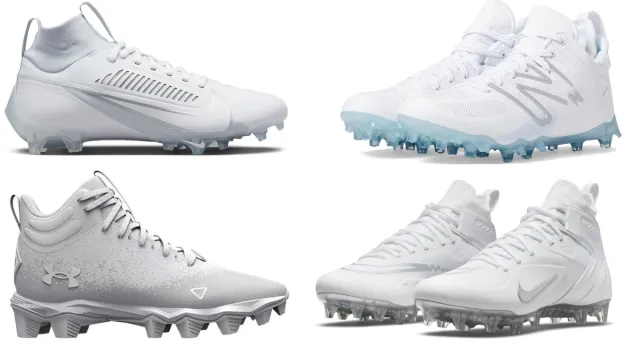
Lacrosse cleats are commonly available in mid-cut designs that provide additional coverage around the ankle. This can be useful during the frequent lateral movements and changes of direction involved in lacrosse.
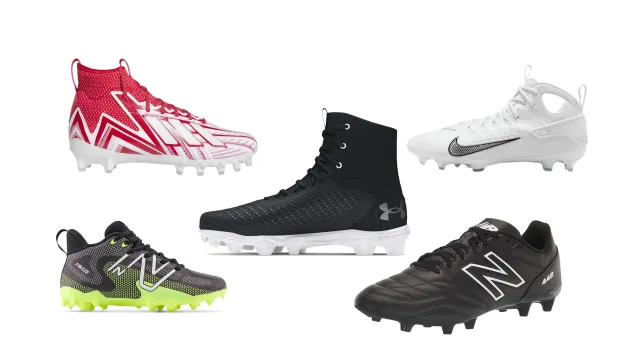
Soccer cleats are generally low-cut. Their design prioritizes ankle mobility and a lightweight feel, which can be appealing to players who prefer unrestricted movement.
Neither design automatically prevents injuries, so fit, comfort, movement mechanics, and individual preference all matter.
Stud Design and Traction
Traction is one of the biggest differences between the two types of cleats.
Lacrosse involves frequent cuts, accelerations, stops, and lateral movements. Lacrosse-specific cleats are designed to provide traction for these movements, and many models use a toe stud to help with acceleration and pushing off.
Soccer cleats are designed primarily around soccer's movement patterns and ball control. Their stud configurations vary considerably depending on whether they are designed for firm ground, artificial ground, or other surfaces.
This means a soccer cleat may work well for some lacrosse players, but its traction may not feel the same as a lacrosse-specific model.
Weight and Flexibility
Soccer cleats are often lightweight and flexible, making them attractive for players who prioritize speed and mobility.
Lacrosse cleats may have additional structure and reinforcement because they are designed for a more physical sport.
For attackers and midfielders who spend a lot of time sprinting and changing direction, the lightweight feel of soccer cleats can be appealing. Players who want more structure and support may prefer lacrosse-specific footwear.
What About Different Lacrosse Positions?
Your position can influence whether soccer cleats make sense.
Attackers and midfielders: Soccer cleats may be a reasonable option if you prefer a lightweight, low-cut feel and have sufficient traction for your field.
Defenders: The additional structure and traction of lacrosse-specific cleats may be more beneficial because defenders frequently use lateral movements and physical positioning.
Faceoff players: Traction is particularly important when exploding from a stationary position, making the stud configuration worth considering carefully.
Ultimately, comfort and traction should take priority over simply choosing a particular sport's cleat.
Choosing the Right Cleat for the Field
The playing surface matters just as much as the sport.
Before purchasing cleats, determine whether you primarily play on natural grass, artificial turf, firm ground, or softer conditions. Use a cleat designed for that surface rather than assuming a soccer or lacrosse label automatically makes it suitable.
Your cleats should also fit securely without creating pressure points or excessive movement inside the shoe.
Soccer Cleats or Lacrosse Cleats?
If you already own soccer cleats, you may be able to use them for lacrosse. They can provide a lightweight, comfortable option, especially for players who prefer a low-cut design.
However, dedicated lacrosse cleats are designed specifically around the demands of lacrosse and may provide a better combination of traction, support, and durability.
For players who regularly play lacrosse, lacrosse-specific cleats are generally the safer starting point. Soccer cleats can still be a practical alternative when the fit, traction, surface compatibility, and league rules all check out.
Discussion
Comments (0)
No comments yet.
Log in with an active subscription to comment.
Log in