
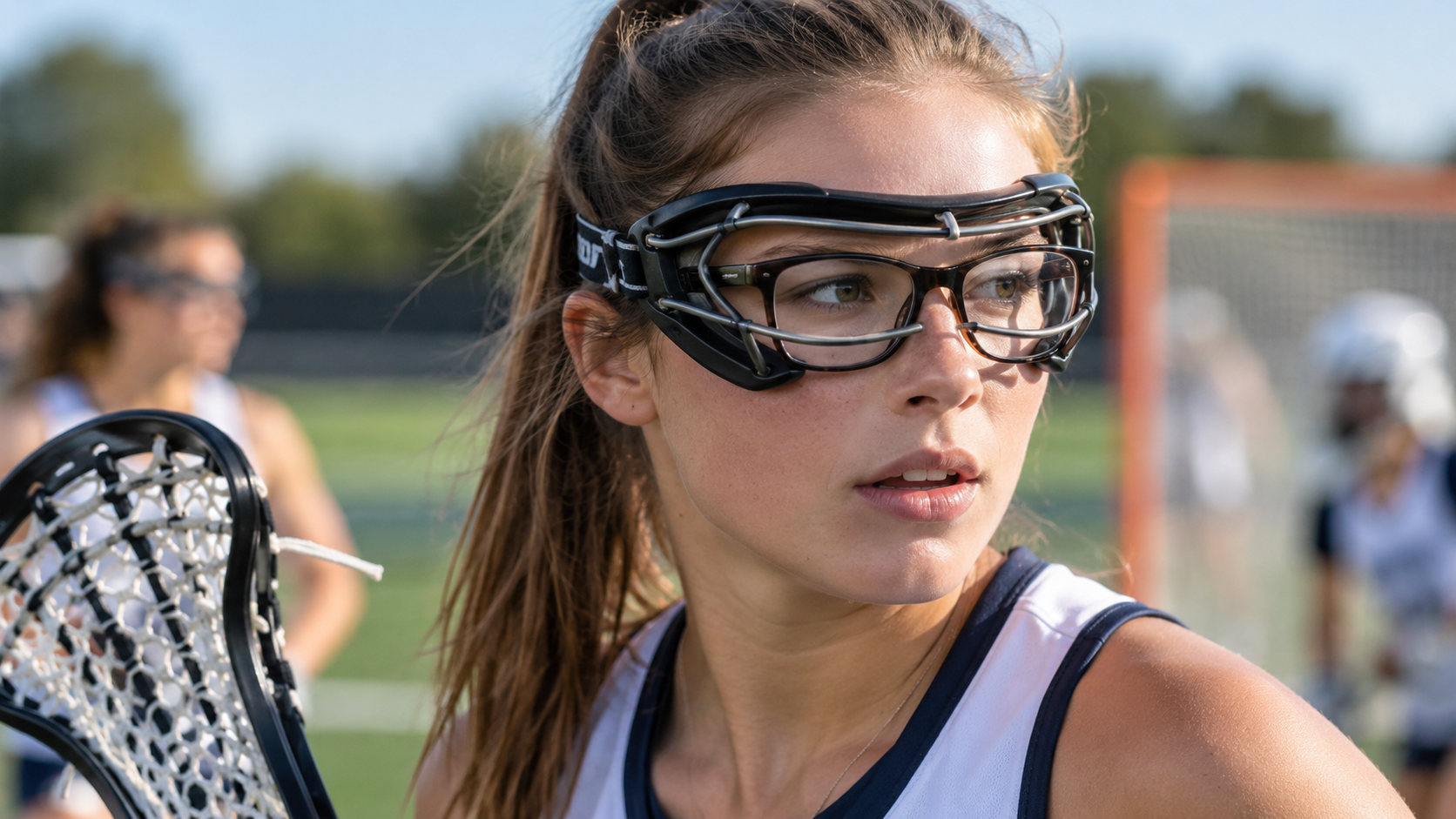
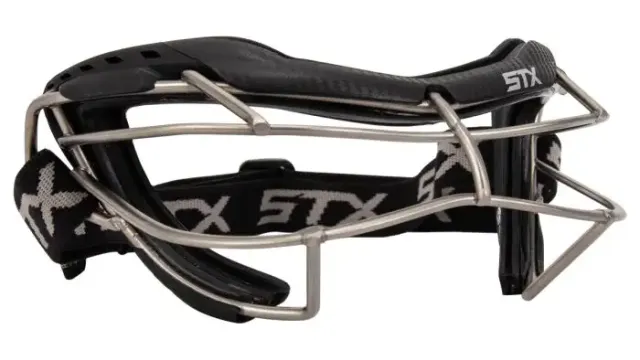
If you play lacrosse and wear prescription glasses, you may wonder whether you can simply put your lacrosse goggles over them.
The short answer is: sometimes, but you should not assume that a standard pair of lacrosse goggles is designed to fit safely over regular glasses.
Fit, the type of corrective eyewear, the protective eyewear model, and the rules governing your competition all matter.
For girls’ and women’s lacrosse in the U.S., protective eyewear is required and must meet the applicable ASTM standard and certification requirements. USA Lacrosse specifically directs U14 players who need personal corrective eyewear to contact its equipment team for guidance.
Can You Wear Regular Glasses Under Lacrosse Goggles?
It depends on the specific goggles and glasses.
Some protective eyewear may physically fit over smaller prescription frames, but that does not automatically mean the combination is approved for competition.
A proper setup needs to do two things:
Allow the player to see clearly.
Maintain the required protective eyewear in the way it was designed to be worn.
You should never force goggles over glasses if doing so changes the position of the goggles, creates excessive pressure, interferes with the strap, or prevents the protective eyewear from sitting correctly.
The equipment also should not be modified to make the combination work. USA Lacrosse rules guidance states that equipment should be worn as the manufacturer intended and not modified from its original manufactured state.
Why Fit Matters
Lacrosse goggles need to stay properly positioned during running, cutting, contact with other players, and normal movement.
Adding a pair of glasses underneath can change the fit around the nose, temples, and sides of the face.
Before using any combination, check whether:
The goggles sit securely.
The glasses don't push the goggles away from the face.
The strap remains properly positioned.
The glasses don't interfere with the protective frame.
The player can see clearly in all directions.
Nothing creates uncomfortable pressure around the ears or nose.
If the goggles move when the player runs or changes direction, the setup needs to be reconsidered.
What Are the Options for Players Who Need Prescription Lenses?
Players who need vision correction have several possible approaches, depending on their age, league, location, and equipment requirements.
1. Prescription Sports Eyewear
One option is purpose-built prescription sports eyewear.
Rather than wearing everyday glasses underneath protective goggles, the player can use sports eyewear designed for athletic use.
This can provide a more streamlined fit, but the important question is whether the eyewear meets the requirements for the player's particular competition.
Don't assume that prescription sports glasses automatically replace required lacrosse protective eyewear.
2. Over-the-Glasses Protective Eyewear
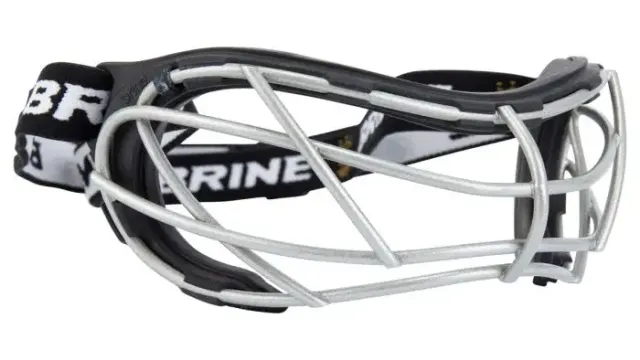
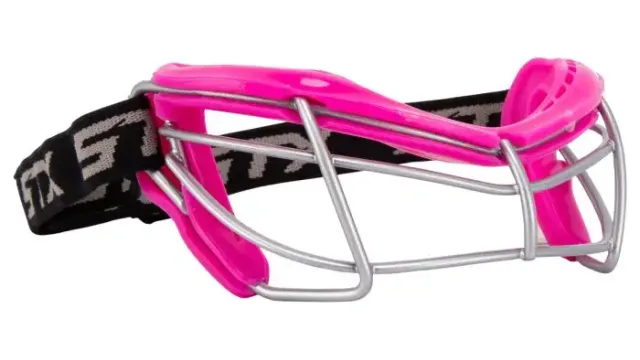
There are also protective eyewear products specifically designed to fit over prescription glasses.
This is different from simply trying to squeeze ordinary glasses underneath a standard pair of lacrosse goggles.
For example, England Lacrosse's current guidance says players who wear prescription glasses should use approved goggles designed to fit over or integrate with eyewear.
For U.S. youth players, however, the certification and league requirements still need to be checked separately.
3. Corrective Contact Lenses
Some players who can comfortably wear contacts may choose them so they can use standard protective eyewear without fitting glasses underneath.
Contact lenses correct vision, but they do not replace protective eyewear. Protective lacrosse goggles are still required where the rules call for them.
If contacts are an option for the player, the decision should be made with their eye-care professional.
What Does USA Lacrosse Require?
For girls' and women's lacrosse, USA Lacrosse states that protective eyewear is required.
The eyewear must meet the current applicable ASTM standard, and legal protective eyewear certified by SEI is listed through the USA Lacrosse equipment guidance. The product and packaging must also carry the required ASTM marking.
The current ASTM specification for women's lacrosse eye protectors is ASTM F3077-25. ASTM describes the standard as covering eye protectors designed to reduce eye injury from impact and penetration associated with women's lacrosse.
This is important when shopping for equipment because simply finding goggles that physically fit over glasses isn't enough.
You also need to verify that the protective eyewear is legal for the competition you're playing.
What About U14 Players Who Wear Glasses?
This is an especially important distinction.
USA Lacrosse specifically states that U14 players who need to wear personal corrective eyewear should contact USA Lacrosse for guidance on available options.
USA Lacrosse has also published information about an eyewear waiver process for certain youth players whose prescription needs prevent them from wearing SEI-certified eyewear. The published waiver document states that eligibility depends on having a prescription that prevents use of certified eyewear and following the required waiver process.
Because these requirements can change, coaches and parents should check the current USA Lacrosse guidance rather than relying on an older waiver or equipment list.
What About High School Lacrosse?
High school players should check the rules governing their competition.
The NFHS maintains its own girls' lacrosse rules and publishes current rules interpretations and changes.
For a high school player who needs prescription eyewear, don't assume that a setup allowed in one youth league will automatically be legal in high school.
Check:
The current NFHS rules
Your state association
Your league's equipment requirements
The specific eyewear certification
Your coach or athletic department
Don't Confuse Glasses With Protective Eyewear
Regular prescription glasses are designed primarily for vision correction.
Lacrosse protective eyewear is designed and tested for impact protection.
The ASTM F3077 specification specifically covers protective eye protectors for women's lacrosse.
That means ordinary glasses should not be treated as a substitute for required lacrosse eyewear.
Likewise, a pair of prescription sports glasses should not automatically be assumed to satisfy a league's protective-eyewear requirement.
The certification of the actual protective equipment matters.
How to Test the Fit
Before taking a new eyewear combination to a game, test it during practice.
Have the player:
Put on the prescription glasses.
Put on the protective goggles exactly as intended.
Adjust the strap according to the manufacturer's instructions.
Run, cut, and change direction.
Check peripheral vision.
Make sure the goggles stay in position.
Check for pressure around the nose, ears, and temples.
The player should be able to move naturally without constantly adjusting the eyewear.
If the goggles shift or the glasses make the protective eyewear uncomfortable, look for another approved solution.
Questions to Ask Before Buying
Before purchasing lacrosse eyewear for a player who wears glasses, ask:
Does it fit over the player's prescription frames?
Physical fit is only the first step.
Is the protective eyewear certified for lacrosse?
Check the current ASTM and SEI requirements for your competition.
Is it legal for the player's age and league?
Youth, high school, college, and different national governing bodies can have different requirements.
Can the player move comfortably while wearing both?
Test the setup before game day.
Does the manufacturer approve the way the eyewear is being used?
If the manufacturer does not intend the goggles to be worn over another pair of glasses, don't modify the equipment to make it work.
What Should Parents and Coaches Do?
If a young player needs prescription glasses, the safest approach is to address the issue before the season begins.
Start by identifying the player's vision needs.
Then check the current equipment requirements for the league and age group.
For U14 players in USA Lacrosse programs, contact USA Lacrosse directly about corrective-eyewear options as instructed on its current equipment page.
For high school players, check the current NFHS and state association requirements.
And when in doubt, bring the actual eyewear combination to practice and ask the coach or officials to confirm whether it meets the competition requirements before game day.
The Bottom Line
Can you wear glasses under lacrosse goggles?
Sometimes a physical combination may work, but fit alone does not determine whether the setup is legal or appropriate for competition.
For girls' and women's lacrosse, protective eyewear must meet the applicable requirements, and USA Lacrosse specifically provides guidance for younger players who need corrective eyewear.
If you wear prescription glasses, consider purpose-built corrective sports eyewear or protective eyewear designed to accommodate glasses, and always verify the current rules for your age group and league.
The goal is simple: clear vision, secure fit, and compliant protection.
Discussion
Comments (0)
No comments yet.
Log in with an active subscription to comment.
Log in