
Defense in lacrosse is about much more than simply staying in front of your opponent. Good defense requires players to understand positioning, communicate with teammates, recognize when to slide, and work together to protect the middle of the field.
For beginners, the most important lesson is that team defense is a connected system. One defender's movement affects everyone else on the field.
Understanding Defensive Positions
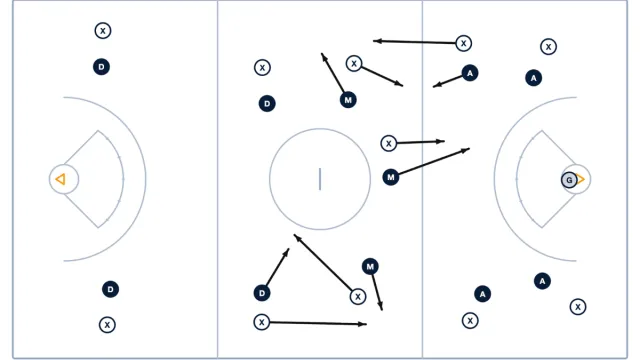
In men's lacrosse, the defense generally consists of three defensemen and a goalie. Defensemen use longer sticks to give them additional reach when defending, while the goalie protects the cage with a larger goalie head.
The Ball Defender
The defender directly matched up with the player carrying the ball is the ball defender.
The primary responsibilities are to:
Stay between the ball carrier and the goal.
Maintain good defensive positioning.
Force the attacker toward the desired area.
Prevent an easy dodge or inside opportunity.
Communicate where the ball is going.
The ball defender should avoid overcommitting. Getting beaten cleanly can force the rest of the defense into a difficult recovery situation.
Adjacent Defenders
The defenders next to the ball defender are often referred to as adjacent defenders.
These players need to be ready to help if the ball carrier gets past the primary defender.
Communication is especially important here. Adjacent defenders should identify which side they are responsible for and be prepared to slide.
The Crease Defender
The crease area is one of the most important parts of team defense.
A defender protecting the inside must be aware of cutters and players near the crease while also being ready to help when the ball defender is beaten.
The crease defender cannot simply watch the ball. They have to constantly balance helping on the dodge and protecting the inside.
What Is a Defensive Slide?
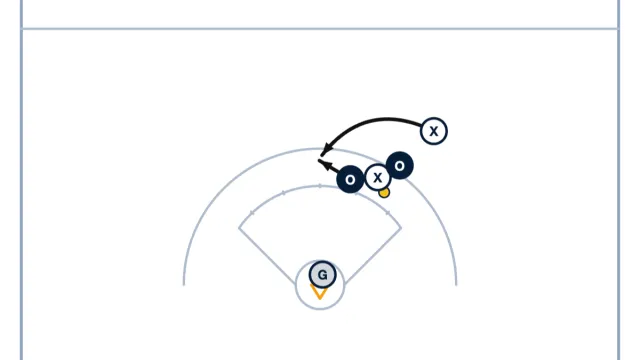
A slide occurs when a defender leaves his assigned player to help a teammate who has been beaten.
The purpose is simple:
Stop the ball before it reaches the cage.
For example, if a ball carrier beats his defender and begins driving toward the goal, an adjacent defender may leave his assignment and slide toward the ball.
The original defender who was beaten then becomes responsible for recovering and finding another player.
This creates a chain reaction across the defense.
First Slide, Second Slide and Recovery
Beginner defenders should understand that the first slide is rarely the end of the defensive rotation.
A basic sequence can look like this:
Ball defender gets beat → First slide arrives → Second defender helps → Original defenders recover.
The second slide is particularly important because the first sliding defender has left someone open.
A defense that only focuses on the first slide can easily give up an open player for an easy pass.
Communication Is the Foundation
Good defensive communication helps players know what is happening before it happens.
Defenders should constantly communicate:
Ball
Left
Right
Slide
Help
Recover
Who they have
The exact terminology can vary from team to team, but the principle stays the same: everyone needs to know where the ball is and what the next defensive action will be.
Communication should happen early rather than after the mistake.
Play Defense With Your Feet
One of the most important beginner defensive habits is learning to defend with the feet before relying on the stick.
The defender should maintain proper body position and use the stick to apply controlled pressure.
Instead of chasing checks, focus on:
Staying balanced.
Moving laterally.
Maintaining good positioning.
Keeping the stick active.
Guiding the attacker away from dangerous areas.
A defender who is constantly reaching or lunging can easily lose his position.
Protect the Middle
A fundamental defensive principle is to protect the middle of the field.
Allowing an attacker to get to the middle can give them better shooting angles, passing options, and access to the crease.
Defenders should work together to force offensive players toward less dangerous areas while maintaining their team defensive structure.
Common Beginner Mistakes
Ball Watching
Defenders often stare at the ball and lose track of their assigned player.
Keep your head moving and maintain awareness of both the ball and your opponent.
Silent Defense
If nobody communicates, defenders are forced to react individually.
Talk early and consistently.
Over-Sliding
A defender doesn't need to abandon his player unnecessarily.
Slides should be purposeful and coordinated with the rest of the defense.
Chasing Checks
Trying to make a spectacular stick check can cause a defender to lose his position.
Position first. Check second.
Forgetting the Recovery
After a slide, defenders need to recover and find the next assignment.
The defensive play isn't finished when the first slide arrives.
A Simple Defensive Checklist
For beginners, remember these five principles:
1. Find the ball.
Know where the ball is at all times.
2. Know your man.
Don't lose track of your assignment.
3. Protect the middle.
Don't give the offense an easy path toward the cage.
4. Communicate early.
Tell teammates what you see.
5. Slide and recover.
Help the ball defender, then immediately reorganize.
Final Thoughts
Great lacrosse defense is built on positioning, communication, teamwork, and discipline.
Individual defensive skill matters, but the best defensive units operate as one group. Players recognize when a teammate is in trouble, communicate the upcoming slide, provide help, and recover together.
For beginners, don't try to master everything at once. Start with good footwork and positioning, learn your team's communication system, and understand your responsibilities when the ball moves.
Once those fundamentals become automatic, more advanced concepts like adjacent slides, crease slides, defensive rotations, and transition defense become much easier to learn.
Discussion
Comments (0)
No comments yet.
Log in with an active subscription to comment.
Log in