
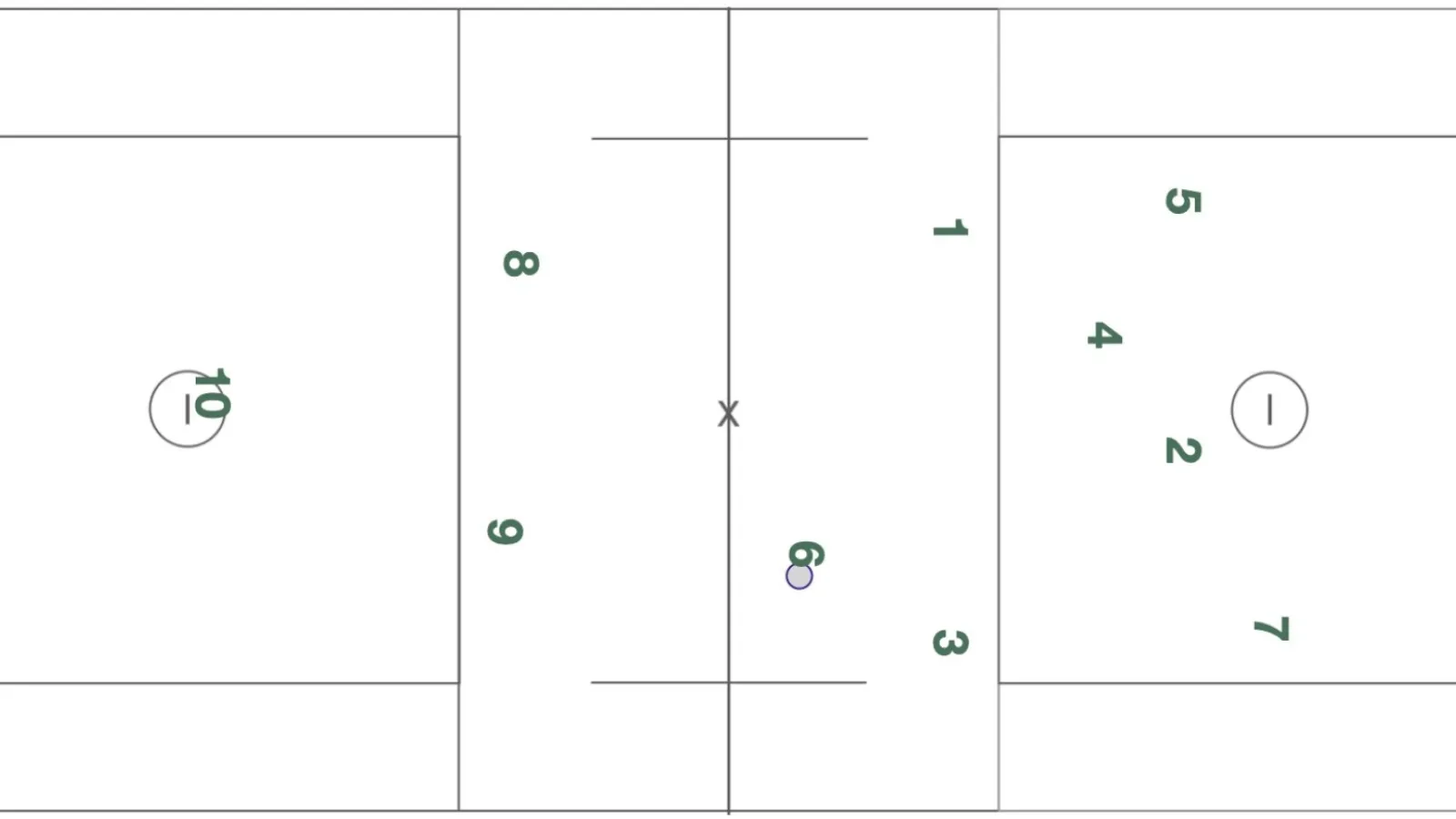
The offside rule in men’s lacrosse is a fundamental regulation that ensures balance and organization on the field. By limiting the number of players on each half of the field, this rule prevents teams from clustering too many players in specific areas, allowing for a fairer and more balanced game between offense and defense. Without this regulation, lacrosse could become chaotic, with teams overloading certain areas, making it difficult to execute structured plays and strategies. Understanding the offside rule is crucial for players, coaches, and fans alike, as it influences tactical decisions and overall gameplay.
The offside rule states that there can be no more than seven players, including the goalkeeper, in a team’s defensive half, and no more than six players in the offensive half of the field. Practically, this means that each team must keep at least three players on their own half (typically defenders) and at least three players on the opposite half (usually attackers) at all times.