The 2-3-1 man-up set is relatively simple, but it can be very effective and easy to coach.

The play is built around movement away from the cage, a quick pass back after a roll, and a cut into the crease for a shooting opportunity.

Two important principles make the play work:

  1. Maintain offensive spacing to force longer defensive slides.

  2. Move the defense into unfamiliar territory and make defenders adjust their positioning.

Man-Up Philosophy

The offense is built around three important ideas.

Shoot Early

Look to get a shot within the first 15 seconds of the man-up possession.

Don't allow the defense to settle completely before attacking.

Shoot From the Crease Area

Structure the offense to create opportunities for shots from around the crease.

Back Up Every Shot

Always have an offensive player backing up the shot.

This allows the offense to maintain possession when a shot misses the cage and gives the team another opportunity to attack.

Starting the 2-3-1

The offense begins in a basic 2-3-1 formation, counting from the top.

The players work the ball around the outside perimeter while maintaining good spacing.

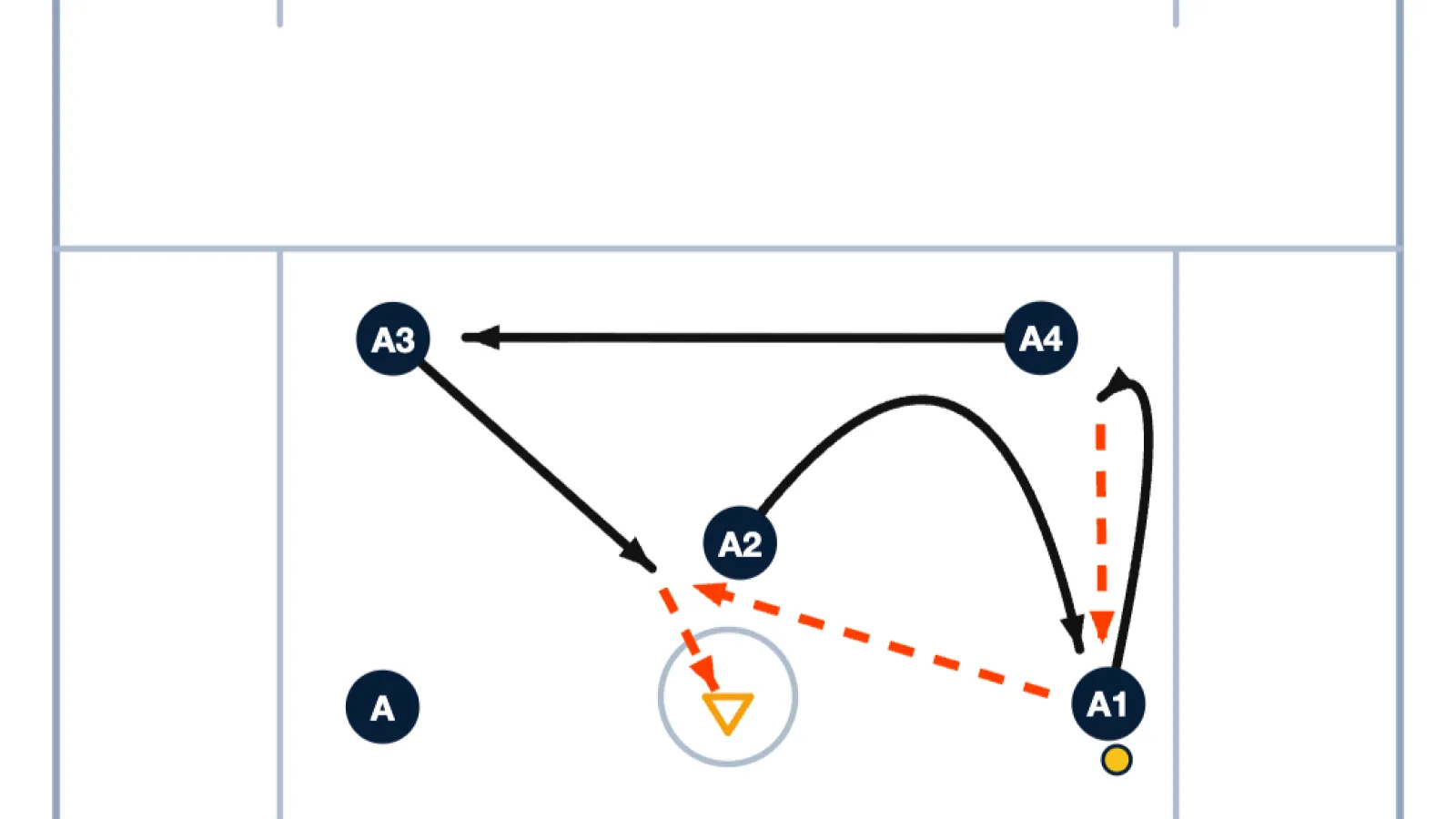
When the ball reaches the right-hand lower point player at goal-line extended, the action begins.

Carry Up

Instead of staying at goal-line extended, the right-hand wing player carries the ball up the channel toward the restraining line.

The purpose is to force his defender to move with him.

The defender may have to follow the ball carrier up toward the top, potentially creating confusion or leaving space behind.

At the same time, the offensive player in the crease moves outside into the area where the wing attackman originally started.

This movement effectively mirrors the carry-up and forces the crease defender to make a decision.

Ideally, the defender vacates the crease area, even if only for a moment.

Roll Back and Pass

Once the defender has been moved, the ball carrier rolls back.

He then passes the ball to the original crease attackman, who has now moved outside to the right-side lower wing.

This quick reversal changes the point of attack and creates the opportunity for the next action.

Diagonal Crease Cut

As the pass is made back, the top-left point player cuts diagonally toward the vacated crease area.

The player who moved out of the crease can now make the pass to the cutting player.

The cutter receives the ball and takes a left-handed shot.

The movement is designed to create a quick shooting opportunity before the defense can recover and reorganize.

Resetting the Formation

After the shot or action:

  • The top-right point player moves across to the left top point.

  • The original ball-carrying attackman moves into the right top point.

  • The offense returns to its basic 2-3-1 formation.

From there, the team can continue working the ball around the perimeter and run the action again.

Run It to Both Sides

Although this version creates a left-handed shooting opportunity from the left side, the same concept can be run in the opposite direction.

The action can be mirrored to create a right-handed pass and right-handed shooting opportunity.

The key is maintaining the spacing and executing the movement quickly.