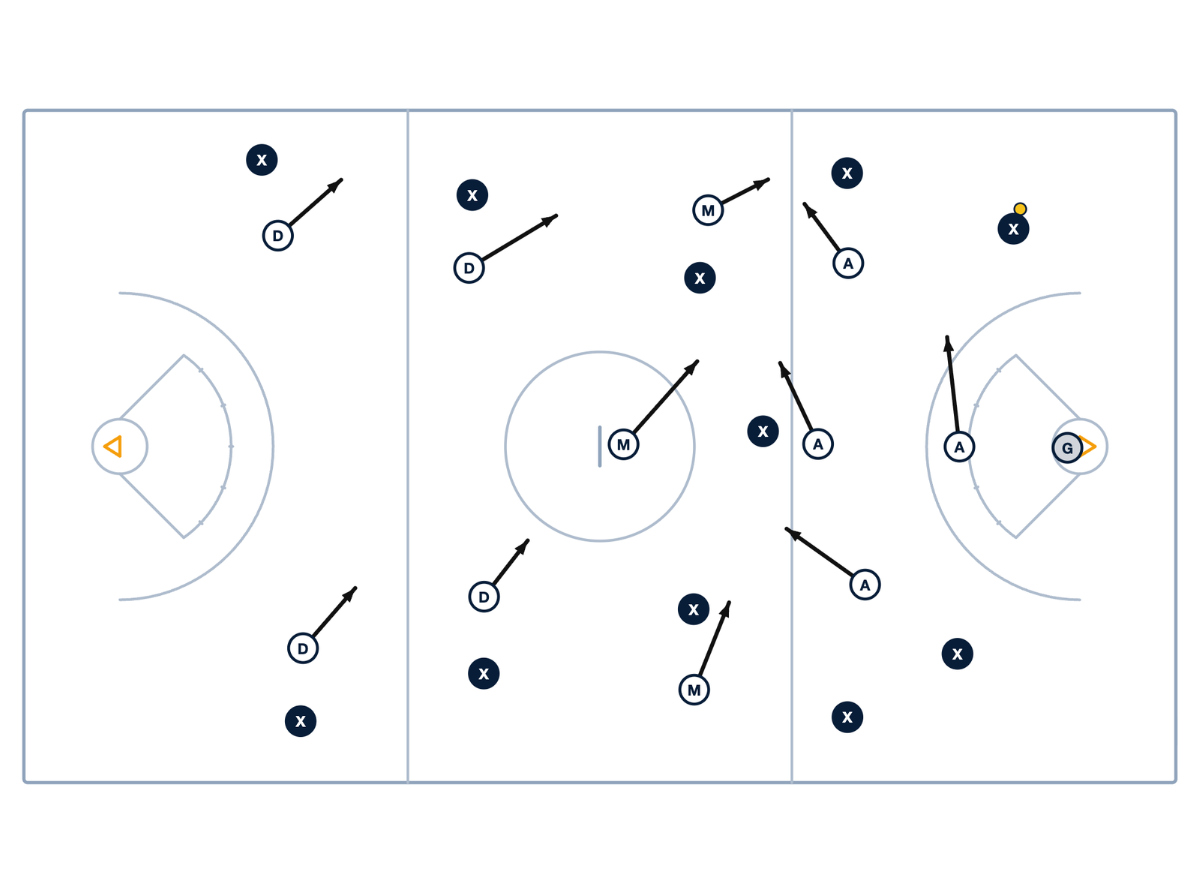
A zone ride is a riding system where players drop into specific areas, or zones, instead of matching up with individual players.
The goal is to control an area of the field, slow down the clearing team, keep the ball in front of the ride, and force the ball backward or into difficult passing situations.
Levels of the Zone Ride
The zone ride has three levels based on where the ball is on the field.
Level 1: Green
The ball is on the offensive side of the 30, usually with the clearing team's goalie.
This is the lowest level of threat, so the ride gets into its shape and prepares to defend the clear.
Level 2: Yellow
The ball is between the 30s and the middle of the field.
The threat increases as the ball moves toward the restraining line. The ride should work to slow the ball down before it reaches the 30, where the clearing team can begin its offense.
Level 3: Red
The ball is on the defensive side of the 30 for the riding team.
At this point, the ride has been broken and the clearing team is close to starting its offense.
The goal is to prevent the ball from getting this far whenever possible.
Box Zone Ride
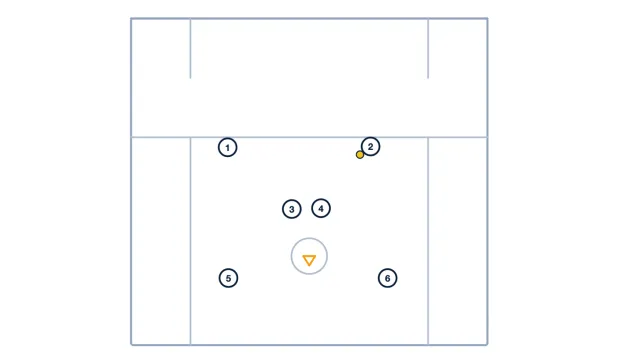
The Box Zone Ride places four attackers in a box formation as the first line of defense.
The main goal is to:
Slow down the ball
Shift with the ball
Keep the ball in front of the ride
Clog the sideline and middle
Force long passes
Create turnovers
Force the ball backward
The ride can be set up in different areas of the field depending on the opponent's clear.
Move When the Ball Is in the Air
One of the most important concepts in a zone ride is moving when the ball is in the air.
As soon as the ball is passed, everyone should shift together.
Don't wait for the player to catch the ball.
If you wait for the catch, you're already a step behind and the ride can be broken.
Think of everyone as being on a string. When the ball moves, everyone moves.
Shift With the Ball
When the ball moves to one side, the ride shifts toward that side.
The goal isn't to run directly at the ball.
Instead, shift over and down to clog that side of the field and force the clearing player into a difficult decision.
The ride wants to make the player run backward or send the ball back to the goalie.
Use the Sideline
The sideline can act almost like another defender.
The ride should funnel the ball toward the sideline and use that limited space to create pressure.
You don't want the clearing team getting the ball into the middle of the field because there is much more space available there.
Instead:
Keep it outside → Clog the middle → Force the ball backward.
Bumping & Trapping
The box ride can use bumping to move a player toward the sideline and create a trap.
The top of the box moves with the ball while another attacker slides over to create the double.
The goal is to trap the ball near the top of the 30 and force a turnover or backward pass.
You don't always have to trap or double. Sometimes simply shifting and taking away passing options is enough.
Diamond Zone Ride
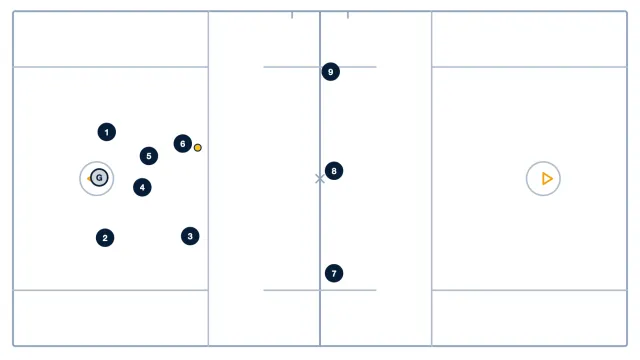
The Diamond Zone Ride is similar to the box but is designed to create more immediate pressure on the ball.
The diamond has a low attacker positioned in front of the goal, changing the shape of the ride.
The focus is to:
Pressure the ball carrier
Keep the ball in front
Funnel the ball toward the sideline
Create doubles and traps
Prevent easy passes
The Diamond Shift
When the ball moves, the diamond shifts together.
The low attacker moves toward the ball, while the rest of the ride adjusts to maintain the shape.
Don't run directly at the ball too early.
If the ball is simply passed back to the goalie, the ride can become stretched and create a 2v1.
Instead, move together, funnel the ball, and keep the ball in front.
The Middies' Role
The midfielders are extremely important in the Diamond Ride.
They need to recognize when the two attackers are going to trap and move into position to prevent the ball from moving upfield.
If one player is even a second late, it can put extra pressure on the rest of the riding team and create openings.
Everyone has to move together.
Keep the Ball on One Side
Once the ride has shifted, try to keep the ball on that side.
If the clearing team gets a cross-field pass, the ride has to shift all the way across the field again.
Keeping the ball on one side creates pressure and makes the clearing team work harder.
When to Use a Zone Ride
A zone ride can be especially useful against teams that clear well and like to push the fast break.
Instead of matching players across a large area of the field, the zone allows the riding team to occupy space and shorten the field.
It can also be useful when you want to bleed the clock.
With a lead late in the game, a zone ride can slow the clear and force the opponent to use valuable time before setting up its offense.
The zone can also be used when you're woman-down.
The shape may change depending on which player has the card, but the goal remains the same:
Keep the ball in front.
Hide open players.
Slow the clear.
Take time off the penalty.
Prevent the ball from advancing down the field.
Key Coaching Points
The most important things to remember are:
Move when the ball is in the air.
Keep the ball in front of the ride.
Move together.
Use the sideline as another defender.
Force the ball backward.
Communicate decisively.
Maintain your shape as you shift.
The goal of the zone ride isn't necessarily to win the ball immediately. It's to slow the clearing team, take away easy passes, occupy space, and make the clear difficult.
Discussion
Comments (0)
No comments yet.
Log in with an active subscription to comment.
Log in