Virginia was traditionally known for an aggressive man-to-man defensive style. The defense relied on athletic defenders, pressure, adjacent slides, and forcing offenses toward the outside.
But when injuries and personnel changes affected the defense, Coach Dom Starsia recognized that continuing with the same system might not be the best option.
The answer was a zone.
Rather than completely reinventing Virginia's defensive philosophy, Starsia adapted a zone structure that incorporated principles his players were already familiar with. The result was a unique system that resembled a 3-3 zone, while placing particular emphasis on what happened when the ball moved behind the cage.
Why Virginia Turned to a Zone
The change was largely personnel-driven.
Virginia had a young defense and injuries to key players. Instead of forcing those defenders into a system that depended heavily on individual matchups, Starsia made a significant adjustment late in the season.
The zone also gave Virginia another defensive look for opponents to prepare for.
That element of surprise became particularly valuable.
When an opponent has spent the majority of the season preparing to attack a team's man-to-man defense, suddenly seeing a zone can force the offense to make different decisions.
The Basic UVA Zone
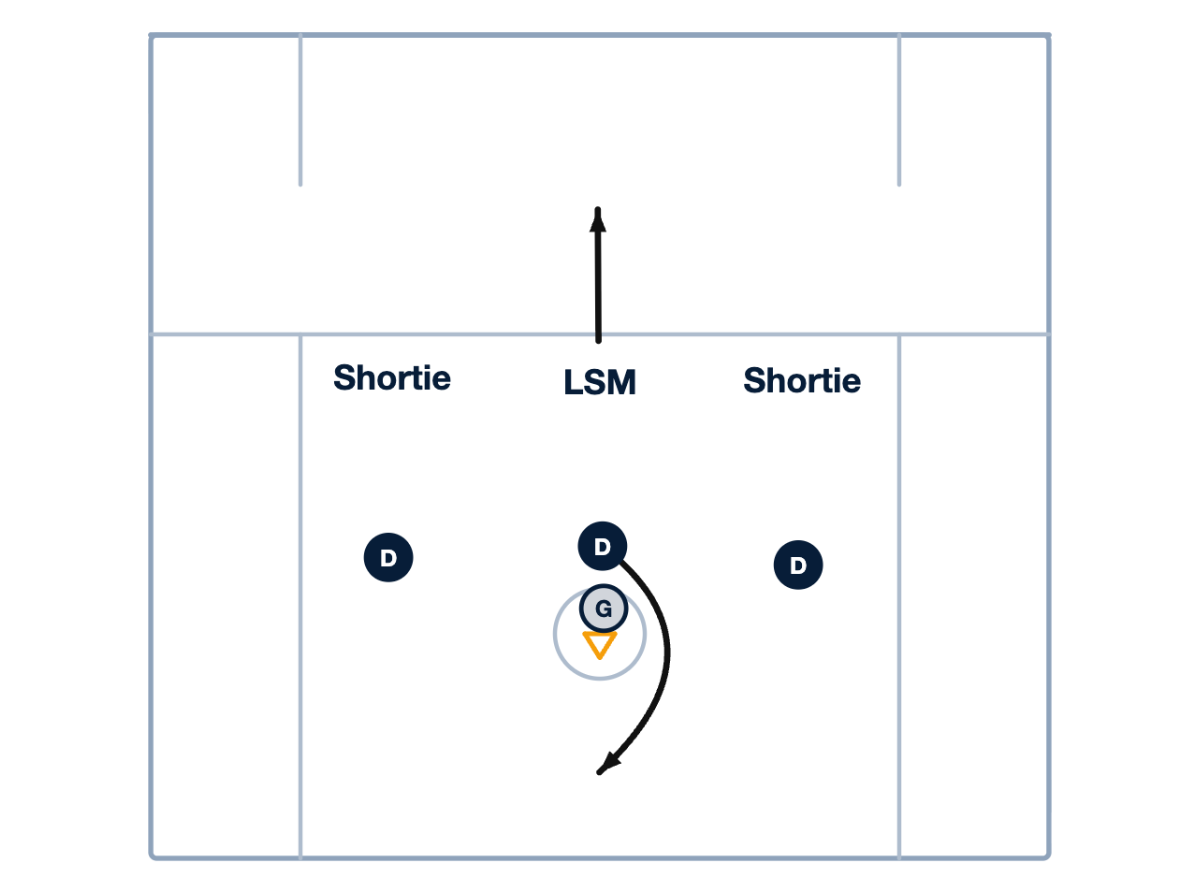
The formation looks similar to a 3-3 defensive alignment.
One of the most important characteristics is that the off-ball defenders, particularly on the backside, remain condensed and sag toward the middle.
The objective is simple:
Protect the inside.
Virginia wanted to prevent offensive players from moving into dangerous areas for easy feeds and close-range shots.
Rather than constantly rotating defenders throughout the zone, the system relied heavily on defenders handing off the ball carrier as he moved from one defender's area into another.
This is one of the most important concepts in the system.
The Handoff Is the Key
As an offensive player carries the ball toward an adjacent zone defender, the original defender does not simply chase the ball carrier into the next zone.
Instead, the defenders communicate and hand the ball carrier off.
The receiving defender takes responsibility for the ball while the original defender mirrors back into his defensive position.
This helps maintain the overall shape of the zone.
The goal is to avoid unnecessary rotations that create large openings elsewhere on the field.
In other words:
Don't chase the ball. Maintain the zone.
Defending Behind the Cage
One unique aspect of this zone is how it handles the ball behind the cage.
When the ball is passed to X, a pole can initially rotate toward the ball.
But after the pass, that defender should mirror back toward the lower defensive area at GLE rather than continuing to rotate around the field.
This allows the defensive structure to remain relatively consistent.
The defense may occasionally give up a longer outside shot, but the trade-off is protecting the dangerous areas closer to the goal.
Protect the Crease
The crease defender plays an especially important role.
The defender in the crease stays home and protects the inside.
When there are two offensive players around the crease, the crease defender is responsible for the offensive player closest to the ball.
As the ball moves, the defender communicates and adjusts his responsibility accordingly.
The priority remains the same:
Protect the inside and prevent easy crease opportunities.
When two offensive players occupy the crease area, backside defenders can also help protect against the player away from the ball.
Communication Is Essential
A zone can look simple on a diagram, but it requires excellent communication to work in a game.
Players need to recognize:
When to hand off the ball carrier
Where the next defender is positioned
When to mirror back into the zone
Which crease player is the priority
Where skip and cross-field passes may develop
The system depends on players communicating with each other rather than relying entirely on individual assignments.
The Zone Creates Clearing Opportunities
Another benefit of the system is the potential for transition.
Because defenders on the far side aren't locked onto individual offensive players, they may be able to break upfield earlier when their team wins a save or ground ball.
This can create additional space for clearing.
If the offensive team begins to collapse toward the zone, its spacing can deteriorate. That can create opportunities for defenders to release early and attack the transition game.
Don't Overcomplicate the System
One of the interesting coaching lessons from the UVA zone is how Starsia approached implementation.
Instead of overwhelming players with countless rules, the system could be introduced through a few key principles:
Protect the inside.
Hand off the ball carrier.
Mirror back into position.
Communicate.
Avoid unnecessary rotations.
Then allow players to work through the system during practice.
The players' communication and understanding of the system become increasingly important as they gain experience.
The Element of Surprise
The UVA zone also benefited from its timing.
Virginia did not spend an entire season showing opponents exactly what they planned to do.
The change gave opposing teams less time to prepare specifically for the system.
That doesn't mean a zone should always be a team's primary defense. Against well-prepared opponents, a defense may need multiple looks and the ability to adjust.
But the UVA example shows the value of being willing to change when circumstances demand it.
Good defensive systems aren't always about staying with what has worked. Sometimes the best adjustment is recognizing when your personnel require something different.


Discussion
Comments (0)
No comments yet.
Log in with an active subscription to comment.
Log in