
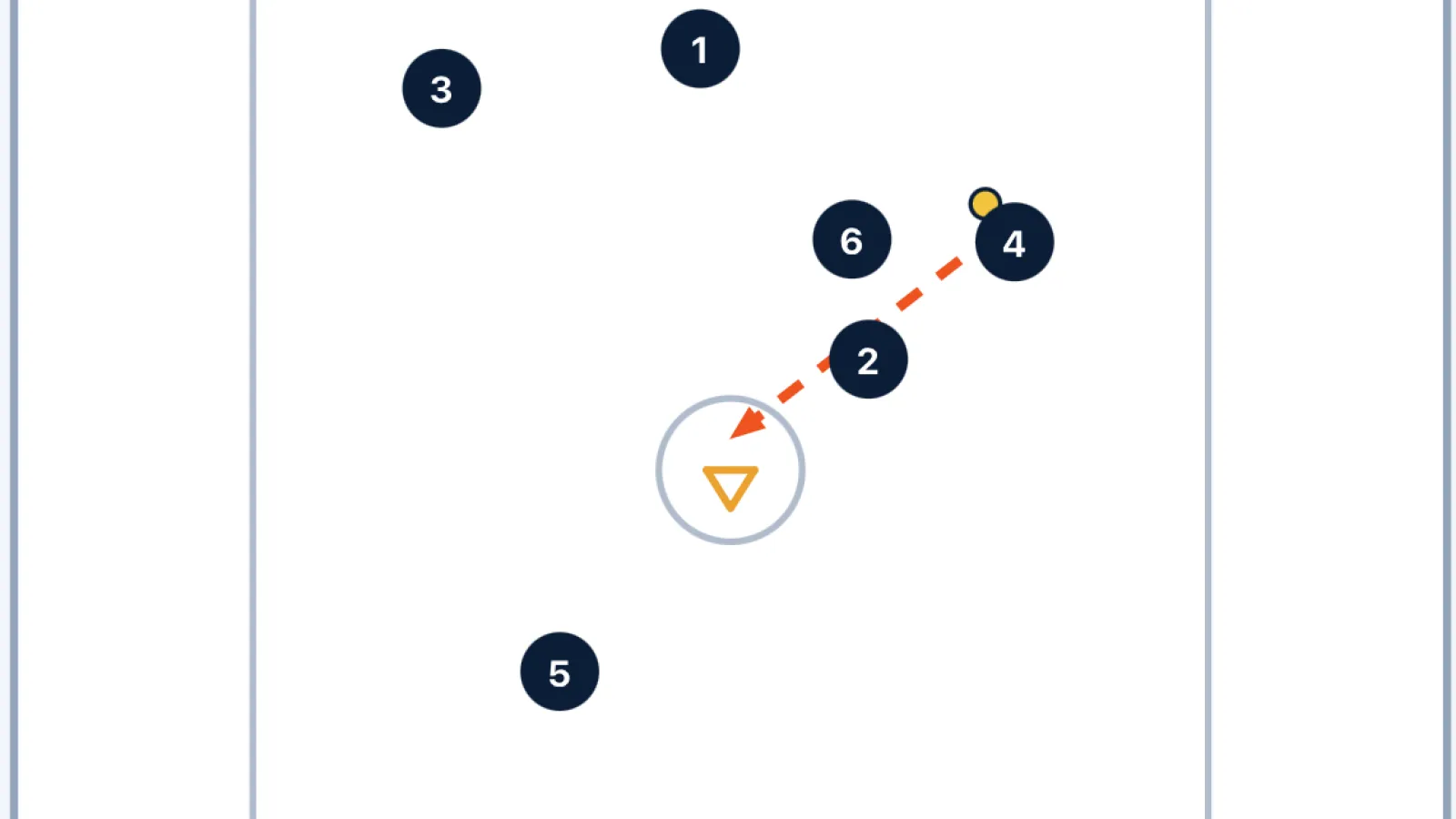
When the ball moves to a shooter on man-up or against a zone, there is usually one defender whose job is to rotate, close the space, and get a stick onto the shooter’s gloves before he can release the ball. The off-ball offensive player must recognize who that defender is and position himself between the defender and the shooter.
The purpose of the seal is not necessarily to create a wide-open shooter. It is to prevent the defender from reaching the shooter’s hands. Even if the defender can still see the shooter or move toward him, he cannot affect the shot if he cannot get his stick into the shooting lane or onto the shooter’s gloves.
This requires anticipation. The offensive player should establish his position before the pass arrives—not wait until the defender has already started closing out. He gets inside the defender’s path, stays balanced, and occupies the space the defender needs to travel through. That forces the defender to go around the seal, buying the shooter the extra second needed to catch, set his feet, and shoot with his hands free.