I. Overview

  • The Cascade Z is Cascade’s newest premium men’s lacrosse helmet.

  • It is not simply an XRS Pro with a movable facemask.

    • The shell has been redesigned.

    • The ventilation system has been expanded.

    • The internal liner and lateral-impact system have been updated.

    • The rear fit system has been refined.

    • The chinstrap has been repositioned.

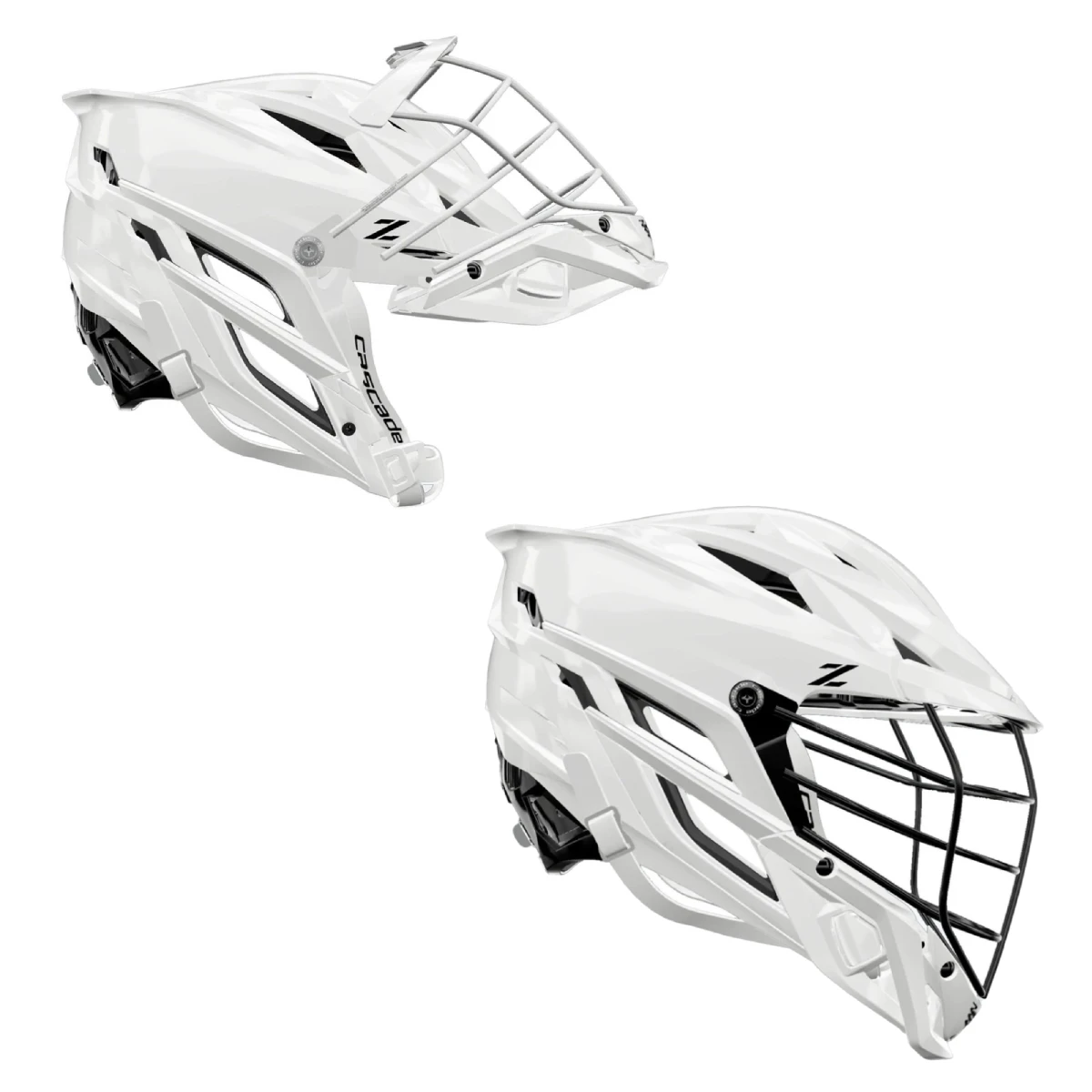
  • Its defining feature is FlipTek, the first flip-up facemask system built into a lacrosse helmet.

  • Cascade describes the Z as its most advanced helmet to date.

  • It is also the official helmet of the Premier Lacrosse League.

  • The current listed retail price is $409.99, compared with $339.99 for the XRS Pro.

II. FlipTek Facemask System

A. How it works

  • The facemask is mounted to a long metal side structure that pivots near the upper portion of the helmet.

  • Release buttons are positioned on both sides of the mask.

  • The player must press both buttons to release the mask.

    • The dual-button design helps prevent an accidental release during play.

  • Once released, the mask rotates upward with the visor.

  • To close it:

    • Pull the mask back down.

    • Press it into position.

    • Listen for an audible click on both sides.

  • Those clicks confirm that the mask has locked into its playing position.

  • Cascade says the mechanism can be operated with or without gloves.

B. Sideline uses

With the mask raised, a player can:

  • Drink water without removing the entire helmet.

  • Eat a quick snack or energy product.

  • Adjust or remove a mouthguard.

  • Wipe sweat from the face or eyes.

  • Communicate more naturally with coaches and teammates.

  • Rest between shifts without completely removing the helmet.

  • Keep the helmet on during short sideline breaks.

C. Benefits for players who wear glasses

  • A traditional lacrosse helmet can be difficult to pull over glasses.

  • The fixed facemask and narrow opening may:

    • Catch the frames.

    • Push the glasses out of position.

    • Bend or damage them.

    • Make removing the helmet awkward.

  • With the Cascade Z:

    • The player can put the helmet on with the mask raised.

    • The sides of the helmet have more flexibility while the mask is disengaged.

    • Glasses can then be positioned through the open front.

  • This may be one of FlipTek’s most practical uses, even though it has not received as much attention as hydration.

D. Easier entry for larger heads

  • With a traditional fixed facemask, the mask helps hold the sides of the helmet in a relatively rigid position.

  • When the Z’s mask is raised:

    • The lower sides of the shell can flex outward more easily.

    • The helmet opening becomes easier to spread while putting it on.

  • This does not necessarily make the helmet’s interior larger.

  • It may, however, make it much easier to get the helmet over:

    • A larger head.

    • Wider facial features.

    • Prominent ears.

    • Glasses.

E. Potential trainer and medical access

  • Raising the mask gives an athletic trainer direct access to the player’s:

    • Face.

    • Eyes.

    • Nose.

    • Mouth.

    • Jaw.

  • This could help with certain sideline evaluations.

  • It may allow a trainer to check the player without immediately pulling the helmet over the head and ears.

  • However:

    • The flip-up mask should not be presented as a replacement for established emergency procedures.

    • Helmet removal after a suspected head or neck injury should be performed only by properly trained medical personnel.

    • No independent medical advantage should be claimed unless supported by appropriate testing and emergency-care protocols.

F. Limitations of FlipTek

  • A player who wears the helmet very low over the eyebrows may find that the raised mask and visor still sit partly within the upper field of vision.

  • The mechanism adds:

    • Hinges.

    • Release buttons.

    • Locking components.

    • Additional moving parts.

  • Moving parts may require more inspection than a fixed facemask.

  • Players must develop the habit of confirming that both sides have clicked securely into place.

  • The mask’s raised appearance is unusual and may take time for players to accept.

  • Some players may decide that removing a traditional helmet on the sideline was never enough of a problem to justify the added cost.

  • The long-term durability of the hinge and locking mechanism will become clearer after extended use.

III. Redesigned Chinstrap

A. Interior attachment

  • On traditional Cascade helmets, the upper chinstrap attachments and buckles are more visible around the mask and temple area.

  • On the Cascade Z:

    • The upper portion of the strap attaches inside the helmet.

    • It is positioned lower and farther away from the player’s peripheral field of vision.

  • The attachment is permanently secured inside rather than relying on an external upper buckle that most players rarely open.

B. Improved peripheral vision

  • Moving the chinstrap hardware inside clears space near the sides of the facemask.

  • This is particularly valuable when:

    • Identifying an adjacent defender.

    • Seeing a cutter approaching from the side.

    • Reading a slide.

    • Tracking an off-ball player.

    • Reacting to pressure during a clear.

  • The improvement may be most noticeable to:

    • Defensemen scanning off-ball movement.

    • Goalies directing the defense.

    • Ball carriers reading pressure from the side.

C. Continuous adjustment system

  • The Z uses a more integrated, continuous strap arrangement.

  • To shorten or lengthen one section:

    • The strap is threaded through the internal guide.

    • The adjustment continues through to the lower portion.

  • Numbered markings help the player:

    • Match the adjustment on both sides.

    • Record a preferred setting.

    • Maintain balanced strap tension.

  • This should reduce the guesswork involved in making one side match the other.

D. Importance of correct adjustment

  • FlipTek should be operated only after the chinstrap has been properly fitted and fastened.

  • Without a secured chinstrap:

    • Pressing the release buttons may cause the helmet to shift.

    • The player may have difficulty raising or lowering the mask cleanly.

  • All four points of the chinstrap must be properly secured.

  • There should be no unnecessary slack.

  • The chin cup should sit directly against the chin.

IV. Fit System

A. Adult sizing

  • The Cascade Z is currently intended for adult players rather than youth sizing.

  • It uses approximately the same fit range as the XRS Pro and SL.

  • Retail sizing information lists the helmet for head circumferences of approximately:

    • 21.5 to 24.5 inches

    • Approximately 54.6 to 62.2 centimeters

  • It is marketed as one size fitting most adult players. Cascade Z sizing information

B. Rear adjustment

  • The adjustable rear section extends farther upward into the back of the helmet.

  • This allows the fit system to wrap more closely around the rear of the head.

  • The goal is to produce:

    • Better rear-head engagement.

    • Less unwanted movement.

    • A more secure, locked-in feeling.

    • A more adaptable fit for different head shapes.

C. Proper fit indicators

A properly fitted Cascade Z should:

  • Feel snug throughout the entire interior.

  • Apply firm, even pressure without creating pain.

  • Have no major gaps between the head and the liner.

  • Sit low enough for the player to look through the proper upper opening of the facemask.

  • Move the skin on the forehead when the helmet is shifted.

  • Remain stable when the player:

    • Turns the head.

    • Looks up and down.

    • Runs.

    • Changes direction.

  • Not slide forward, backward or side to side once the chinstrap is fastened.

D. Fit cautions

  • The flip-up mask may make the helmet easier to put on, but that does not mean an improperly sized helmet is acceptable.

  • A helmet that is too large may shift during contact.

  • A helmet that is too small may:

    • Create painful pressure points.

    • Sit incorrectly.

    • Leave parts of the head improperly positioned.

  • The Z should be tried on before purchase whenever possible.

  • Players should wear the same:

    • Hairstyle.

    • Skull cap.

    • Glasses.

    • Other permitted accessories
      they intend to use during competition.

V. Protection System

A. Z Lateral Impact System

  • The helmet introduces the Z Lateral Impact System.

  • It is designed to improve protection along the sides and rear of the head.

  • These areas are important because lacrosse players can experience impacts from:

    • Body contact.

    • Stick checks.

    • Balls.

    • Falls.

    • Collisions with other players.

    • Contact with the ground.

  • Cascade has not publicly released enough independent comparative data to conclude precisely how much more protective the Z is than the XRS Pro.

  • Therefore, it is safer to describe the system as an updated protective design rather than claiming that it prevents a specific injury.

B. NOCSAE certification

  • Cascade states that the Z has completed the appropriate certification process and meets the relevant NOCSAE standards.

  • NOCSAE certification means the helmet has satisfied the required laboratory performance standard for its category.

  • Certification does not mean:

    • The helmet prevents every head injury.

    • The player cannot suffer a concussion.

    • A newer helmet makes illegal or dangerous contact safe.

  • USA Lacrosse recommends purchasing a helmet carrying the proper NOCSAE certification label and stresses that there is no concussion-proof helmet. USA Lacrosse helmet guidance

C. Ongoing inspection

Because the Z contains a movable facemask, players and equipment managers should regularly inspect:

  • Both release buttons.

  • The mask hinges.

  • The locking points.

  • The side rails.

  • Facemask alignment.

  • Chinstrap attachment points.

  • Interior padding.

  • Rear adjustment system.

  • Shell for cracks or deformation.

  • Certification and warning labels.

The helmet should not be used if:

  • The facemask does not lock on both sides.

  • The mask appears bent.

  • A release button sticks.

  • The shell is cracked.

  • Padding is missing or displaced.

  • The rear fit system is damaged.

  • Any critical component is loose.

VI. Comfort and Ventilation

A. Refined ventilation system

  • The Z includes a redesigned airflow system.

  • Compared with the XRS Pro:

    • Openings across the crown appear larger or more exposed.

    • Additional ventilation is present near the ears.

    • Rear exhaust openings allow warm air to escape.

  • The design attempts to create continuous airflow through the helmet rather than relying only on isolated vents.

B. Expanded Pro Fit liner

  • The interior uses an expanded Pro Fit moisture-wicking liner.

  • The liner is intended to:

    • Manage sweat.

    • Improve comfort.

    • Maintain a close fit.

    • Reduce the hot, saturated feeling that develops during long practices or games.

  • Moisture-wicking material does not eliminate sweat, but it can help move moisture away from the skin.

C. Practical comfort benefits

Improved ventilation and moisture management may be especially noticeable during:

  • Summer tournaments.

  • Box lacrosse.

  • Long practices.

  • Humid conditions.

  • Repeated shifts without time to remove the helmet.

  • Games played on artificial turf in direct sunlight.

VII. Visibility

A. Vision-bar design

  • The Z retains the general Cascade approach of providing a clear horizontal viewing area through the upper portion of the facemask.

  • During play, the player should be looking through the appropriate upper opening rather than through the lower part of the cage.

B. Peripheral field of vision

  • The relocated chinstrap clears some of the structure formerly positioned near the temples.

  • This produces a cleaner lateral view.

  • The benefit is more substantial than simply improving the helmet’s appearance.

  • Peripheral vision affects a player’s ability to:

    • Read pressure.

    • See approaching contact.

    • Recognize cutters.

    • Locate outlets.

    • Follow defensive rotations.

C. Mask-up visibility

  • Raising the facemask creates an almost completely open view of the player’s face.

  • However, players who prefer considerable helmet tilt may still see the raised visor or mask near the top of their vision.

  • This does not affect normal gameplay because the mask must be locked down before returning to action.

  • It may slightly reduce the sense of openness while resting on the sideline.

VIII. Player and Goalie Configurations

A. Field-player version

  • The standard player model includes the functioning FlipTek system.

  • The mask can be raised on the sideline and locked down before play.

B. Goalie version

  • The Z is also available in a goalie configuration.

  • When the required goalie throat protector is installed:

    • The mask is secured in place.

    • The flip-up function is disabled.

  • This means FlipTek is not a functional goalie feature when the helmet is used in its complete goalie configuration.

  • The goalie still receives the Z’s other updates, including:

    • Fit.

    • Ventilation.

    • Liner.

    • Chinstrap positioning.

    • Lateral-impact design.

IX. Appearance and Customization

A. Overall design

  • The Cascade Z has a sharper, more mechanical appearance than the XRS Pro.

  • The hinge and extended side structures make the mask look more integrated with the shell.

  • The rear design includes:

    • A revised vent pattern.

    • A different rear-panel shape.

    • A more prominent adjustable section.

B. Comparison with the XRS Pro’s appearance

  • Some players may prefer the XRS Pro’s split-wing rear design and triangular vent.

  • Others may prefer the Z’s cleaner, more modern appearance.

  • This is largely a matter of taste rather than performance.

C. Custom options

  • Cascade offers both individual and team customization.

  • Depending on the ordering system, customers may be able to select:

    • Shell color.

    • Chin color.

    • Visor color.

    • Facemask color or finish.

    • Rear panel colors.

    • Team decals.

    • Personal graphics.

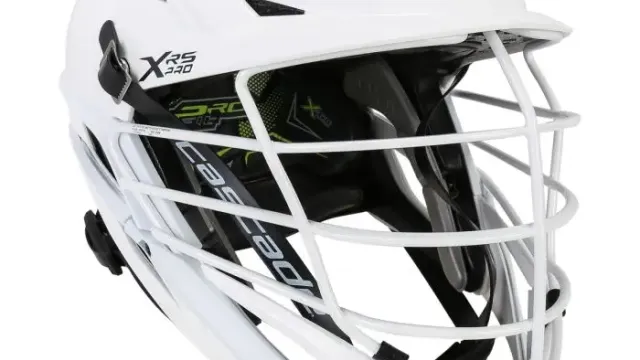
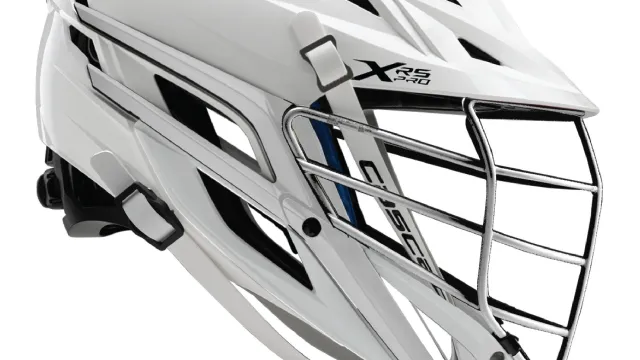
  • Premium colors, fades, chrome finishes and other custom treatments may raise the final price above the standard $409.99 base price.

X. Cascade Z Compared with the XRS Pro

Category

Cascade Z

Cascade XRS Pro

Base price

$409.99

$339.99

Facemask

FlipTek movable mask

Traditional fixed mask

Mask release

Dual-button system

Not applicable

Chinstrap position

Upper attachment moved inside

More traditional external arrangement

Peripheral vision

Cleaner area near temples

More strap hardware near sightlines

Ventilation

Refined and expanded

Previous-generation ventilation

Liner

Expanded Pro Fit moisture-wicking liner

Pro Fit-style system from earlier design

Lateral protection

New Z Lateral Impact System

Previous Cascade protection platform

Rear fit

Rear adjustment extends farther into helmet

Earlier rear-fit design

Ease of putting on

Sides can spread more with mask raised

Fixed mask limits shell movement

Glasses compatibility

Potentially much easier

Often awkward

Moving components

Hinges, buttons and locks

Simpler fixed construction

Adult fit range

Similar to XRS Pro and SL

Adult sizing

Goalie option

Yes, but mask is fixed with throat protector

Yes

Best reason to choose

Access, vision, updated fit and latest technology

Lower price and proven traditional design

XI. Primary Advantages

  • First flip-up lacrosse facemask.

  • Easier hydration without removing the helmet.

  • Easier access to the face and mouth.

  • Particularly useful for players who wear glasses.

  • Easier to put on for some players with larger heads.

  • Cleaner peripheral field of vision.

  • Updated rear-fit system.

  • Improved airflow.

  • Expanded moisture-wicking liner.

  • Updated lateral-impact protection system.

  • Dual-button design reduces the likelihood of accidental release.

  • Audible locking clicks provide feedback before returning to play.

  • Adult player and goalie configurations.

  • Extensive individual and team customization.

  • Meets relevant NOCSAE standards.

XII. Possible Drawbacks

  • The $409.99 base price makes it one of the most expensive mainstream lacrosse helmets.

  • It costs approximately $70 more than the XRS Pro before premium customization.

  • Some players may not see the flip-up mask as necessary.

  • The hinge and lock introduce more mechanical complexity.

  • The long-term durability of the system still needs to be established through multiple seasons.

  • Players must remember to confirm that both sides are locked.

  • The raised mask may not move completely out of view for players who wear heavy helmet tilt.

  • The look of the raised mask may be polarizing.

  • Youth sizing is not presently offered.

  • The goalie configuration disables the flip-up feature.

  • There is not yet enough independent comparative testing to say exactly how its protection differs from other top helmets.

  • An improperly fitted Z is still an improperly fitted helmet, regardless of its technology or price.

XIII. Who Should Consider the Cascade Z?

The Z makes the most sense for:

  • Adult players purchasing a new premium helmet.

  • Players who wear prescription glasses.

  • Players who struggle to pull traditional helmets over larger heads.

  • Players who value peripheral vision.

  • Athletes playing in hot or humid conditions.

  • Players who regularly keep their helmets on between shifts.

  • Teams that want Cascade’s newest helmet platform.

  • Players who enjoy new equipment and are willing to pay for innovation.

  • Coaches and programs that want easier sideline access to a player’s face.

It may make less sense for:

  • Youth players outside the adult fit range.

  • Players who already own a properly fitted XRS Pro in excellent condition.

  • Families or programs prioritizing price.

  • Players who habitually remove their helmet on the sideline and see no inconvenience in doing so.

  • Buyers who prefer a simpler, fixed-mask construction.

XIV. Overall Assessment

  • The Cascade Z is a legitimate redesign, not a novelty feature added to the XRS Pro.

  • FlipTek attracts most of the attention, but several quieter changes may have more everyday value:

    • The interior chinstrap attachment.

    • Improved peripheral vision.

    • Expanded ventilation.

    • The redesigned rear-fit system.

    • Easier entry for glasses wearers and players with larger heads.

  • The biggest question is not whether FlipTek works; it is whether players believe raising the mask solves a problem important enough to justify the higher price and additional complexity.

  • For players who wear glasses or have difficulty putting on a traditional helmet, the answer may be an immediate yes.

  • For everyone else, the decision will likely come down to:

    • Fit.

    • Comfort.

    • Visibility.

    • Style.

    • Budget.

  • The Z represents a bold attempt to rethink a piece of lacrosse equipment that had remained fundamentally unchanged: a shell with a permanently fixed cage.

  • Whether FlipTek becomes the new standard or remains a premium specialty feature will depend on how the mechanism performs after years of real practices, games, weather, sweat and contact.