
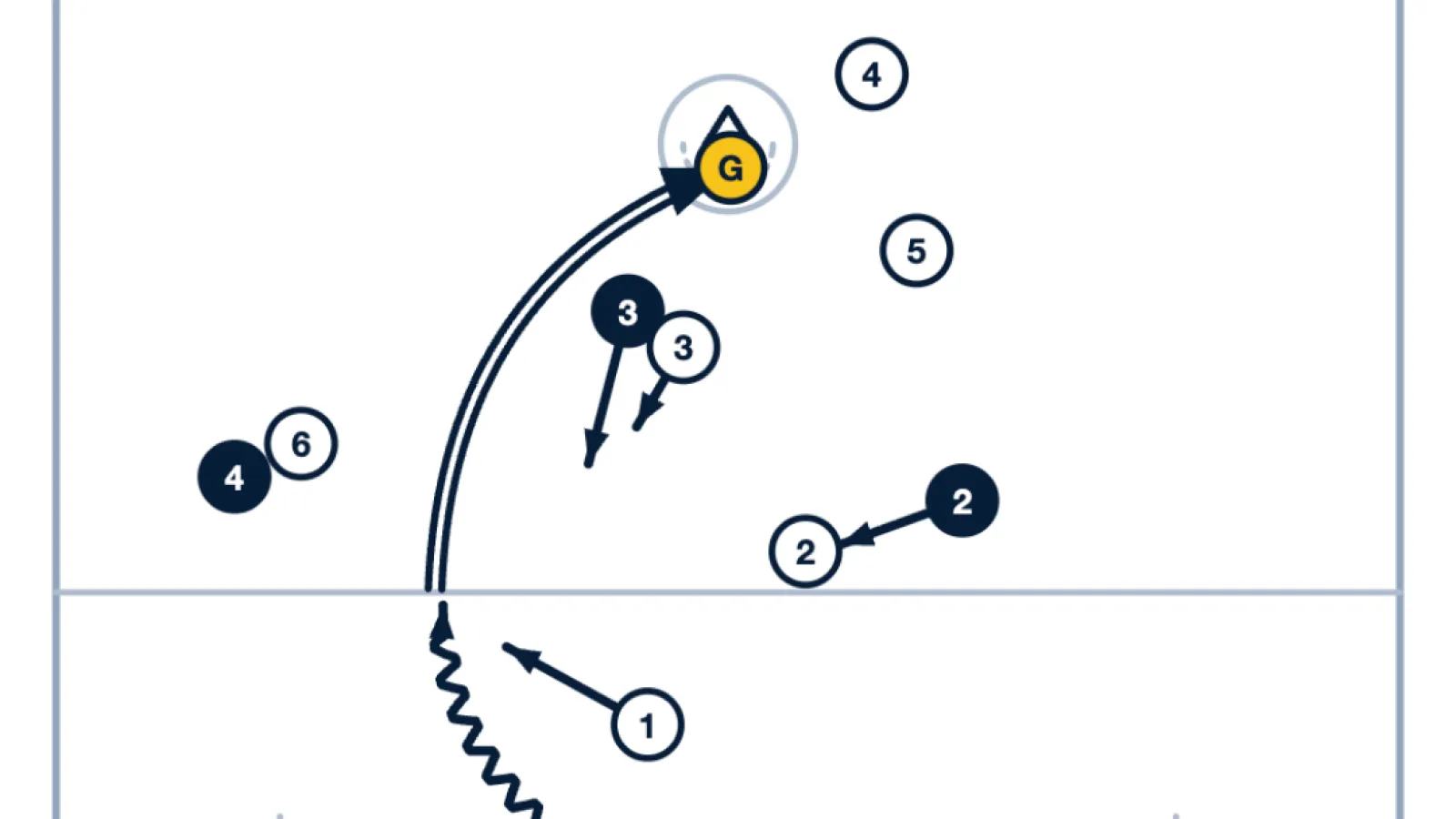
After watching the Maryland versus Johns Hopkins game, I noticed Maryland using a strategy that we could all implement. They primarily operate out of a 1-4-1 set, aiming to isolate matchups against short sticks up top—a common approach—but with a twist: they intentionally position the second short stick as the first slide.
Here’s how it works: as the short stick dodger isolates up top, the other short stick player moves into the crease, forcing their defender to be the first slide. This isn’t by chance; after the dodge, if the slide comes, Maryland quickly resets by moving the ball back to another short stick and recreating the same isolation scenario. They consistently move the ball away from long poles, ensuring the first slide is always a short stick, effectively neutralizing the long poles.
The strategy is highly effective because it exploits matchups and forces short sticks into uncomfortable defensive roles while keeping long poles out of the play. Maryland’s offense wastes no time resetting and executing this approach repeatedly, which works especially well if you have dodgers who struggle against quality long poles. I think this is a brilliant and executable strategy for any team—what are your thoughts?